
Room-darkening library
Blackout blinds
Choose a blind by the darkness you need, the window you have and the fitting you can live with—not by the word “blackout” alone.
Browse the guides ↓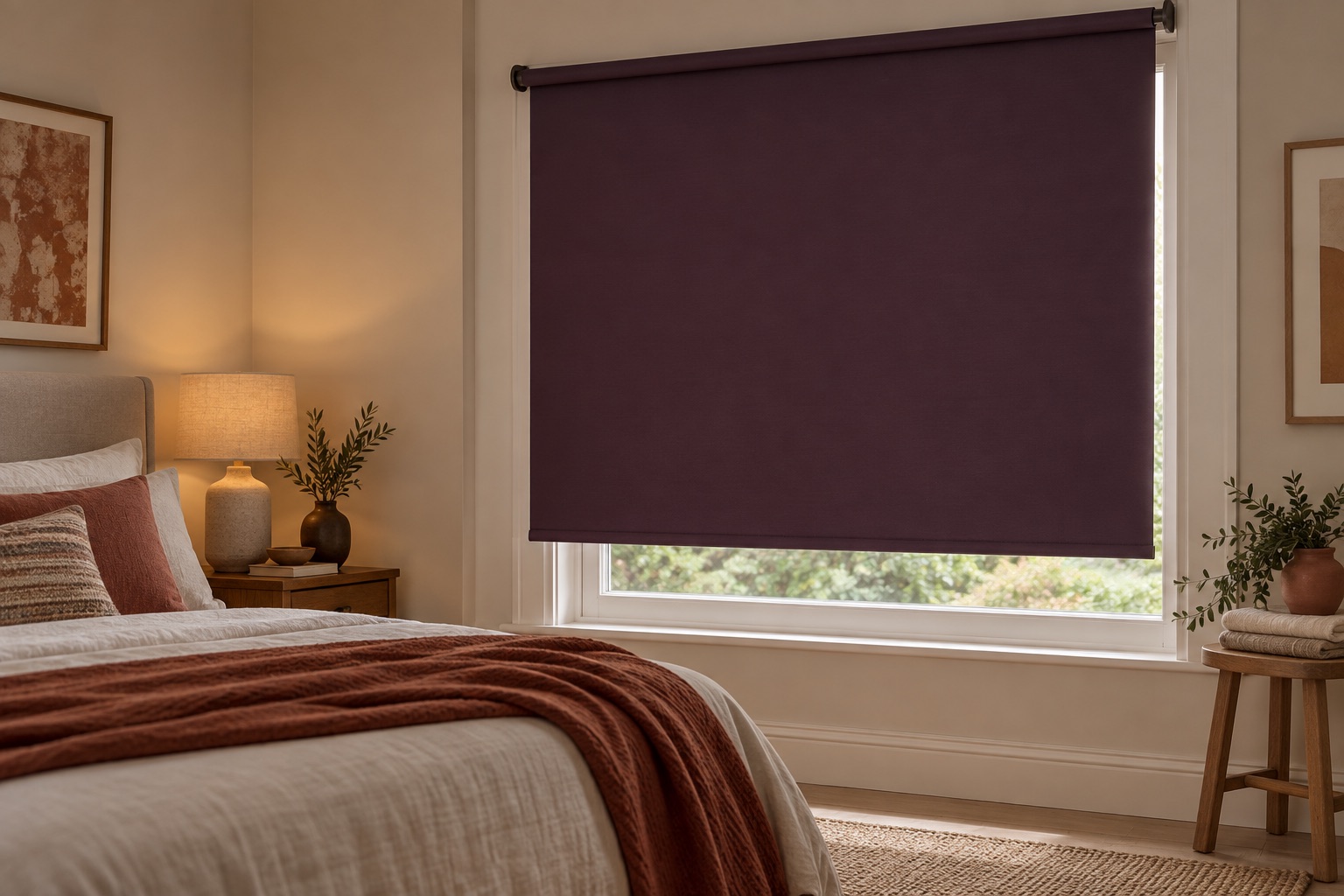
The practical starting point
Start with the window, then choose the blind system.
The useful question is not simply whether a blind uses blackout fabric. It is whether the whole system controls light at the top, sides and bottom of your particular window. Our blackout versus room-darkening guide explains the fabric distinction; the light-gap guide deals with the perimeter that the label cannot describe.
The main blind formats
Ready-made roller blinds offer a familiar daily control and a choice of stock widths. The cloth is often narrower than the complete mechanism and can leave side gaps. An outside-recess fit with overlap may help where the wall and fixings permit it. Start with the roller buying guide if your window is a standard upright opening; check ready-made versus made-to-measure before assuming a stock width will fit.
Cassette and side-channel systems address some of the perimeter routes that a plain roller leaves open. A cassette at the top is not the same as a full light-control frame: check whether side tracks and a bottom treatment are included. The stronger edge control brings more exacting measurements and fitting requirements. The cassette-versus-standard comparison is a useful first decision.
Cellular or pleated blackout blinds fold into a compact headrail. Some sit in a frame, while others leave a perimeter gap much like an ordinary blind. Compare roller and cellular systems by the complete installation, not the fabric alone.
No-drill blinds include tension-fit rollers, bead-mounted Perfect Fit-style blinds and adhesive temporary pleats. “No drill” describes installation, not darkness or damage-free removal. See the no-drill buying guide and check frame compatibility before ordering.
Match the blind to the job
For a standard bedroom where cost and simple daily operation matter most, a suitably sized roller can be sensible. For a room that needs stronger daytime darkening, compare a framed system with a blind-and-curtain layer. Neither guarantees a particular sleep outcome. For a rental or short stay, reversibility and surface suitability may outweigh a fitted finish.
Before ordering, use the measuring guide to note recess depth, handles, vents and opening direction. Distinguish the complete blind width from the useful cloth width. In a child’s room, prioritise safe-by-design controls and follow the supplied instructions. The UK Office for Product Safety and Standards says looped cords can endanger young children and that required safety devices must be fitted; our child-safe blind guide translates this into a room check.
Next steps
Guides that move the decision forward
Start with the decision closest to your window, then explore the more specific fitting and room guides.
Start with the main choice
Best blackout blinds in the UK
Six documented options compared across standard, enclosed, side-track, temporary and portable formats.
Read the guide → Practical guideTemporary and travel blackout
A route through suction cups, adhesive pleats and packable window covers.
Read the guide → Roller buying guideBlackout roller blinds: a practical guide
Compare conventional, no-drill and cordless rollers, with the real fabric-width and edge-light trade-offs explained.
Read the guide → Room guideBest blinds for shift workers
Build a repeatable daytime-darkening setup around the brightest route and the daily routine.
Read the guide → Practical guideMeasure, fit and reduce light gaps
Decide between recess and face fitting, then deal with the edges that ordinary roller blinds leave exposed.
Read the guide →Blind systems and controls
Best blackout roller blinds
Compare drilled, clip-on and cordless roller formats with fabric-width and control trade-offs.
Read the guide → System guideCassette blackout blinds explained
Understand top cassettes, side channels and the measurements a framed system needs.
Read the guide → ComparisonRoller vs Roman blackout blinds
Compare light control, stack depth, care, cost and room style before choosing a format.
Read the guide → Specialist buying guideBest total-blackout blind systems
Compare cassette, framed cellular and removable systems that manage the perimeter as well as the fabric.
Read the guide → System guideBlackout blinds with side tracks
Understand integrated channels, retrofit U-tracks, measurements and installation limits.
Read the guide → ComparisonRoller vs cellular blackout blinds
Compare flat rollers and honeycomb blinds for edge light, depth, controls, care and cost.
Read the guide → ComparisonThermal vs blackout blinds
Separate opacity from window comfort claims and choose by the problem you can observe.
Read the guide → ComparisonCassette vs standard blackout blinds
Compare an exposed roller with a cased head and optional side channels.
Read the guide → Buying guideBest no-drill blackout blinds
Compare cordless, clip-mounted and adhesive systems for compatible windows.
Read the guide → Buying guideBlackout cellular and honeycomb blinds
Understand blackout fabric, frame options, cordless control and custom sizing.
Read the guide → Buying guideBest cordless blackout blinds
Compare spring roller, cellular and framed designs by their control and edge fit.
Read the guide → System guideBlackout pleated blinds explained
Separate single pleats, honeycomb cells and temporary adhesive panels.
Read the guide → ComparisonBlackout blinds vs shutters
Compare slat gaps, roller edges, installation and everyday window access.
Read the guide →Fabric, cost and fitting comparisons
Blackout vs room-darkening blinds
Separate fabric opacity from side gaps and choose the right level of light control.
Read the guide → Buying comparisonReady-made vs made-to-measure blinds
Weigh stock sizes against a custom order, including measurement and return risks.
Read the guide → Budget guideWhat do blackout blinds cost?
Compare complete systems and quote assumptions rather than misleading headline prices.
Read the guide → System guideBlackout Roman blinds
Understand lining, stitch points, side gaps and the raised fabric stack.
Read the guide → System guidePerfect Fit blackout blinds
Check glazing beads, frame depth and realistic perimeter light on a compatible sash.
Read the guide → System guideElectric blackout blinds
Plan power, controls, servicing and fit without confusing motorisation with darkness.
Read the guide → Control comparisonSpring vs chain-operated blackout blinds
Compare daily operation and child-safety requirements independently of cloth opacity.
Read the guide →