
Control the light. Keep the room yours.
Darker rooms,
thoughtfully made.
Practical guidance on blackout blinds, curtains and portable fixes—focused on what changes the result in real UK rooms: the fit, the edges, the window and the way you use it.
- Fit first
- Light paths, not labels
- UK focused
- Homes, rentals and travel
- Safety aware
- Child-safety sources checked
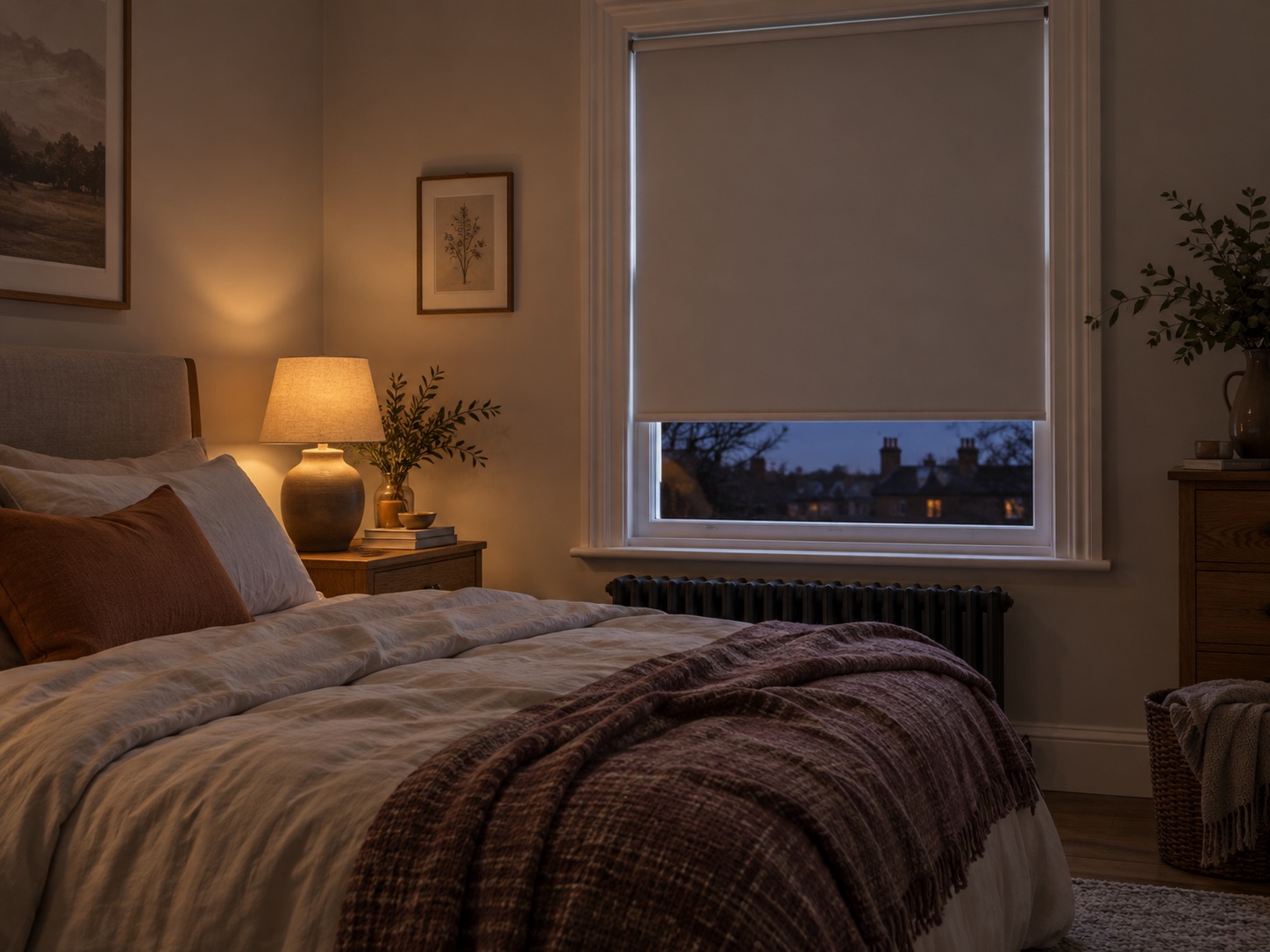
Start with the window, not the label
Find the route that fits your room
Blackout fabric stops light passing through the material. It does not automatically stop daylight wrapping around the sides. These five routes help you choose by installation and use case.
Fitted systems
Blackout blinds
Compare roller, cassette, cellular, cordless and no-drill systems—and understand where each can leak light.
Explore blinds → 02Layered coverage
Blackout curtains
Choose lining, heading, width and pole position for generous coverage rather than relying on the fabric name alone.
Explore curtains → 03Removable options
Temporary & travel
Use suction, adhesive, trim-to-fit and portable solutions with a clear view of residue, condensation and daily effort.
See portable options → 04Use cases
Rooms & windows
Plan for nurseries, daytime sleeping, skylights, bay windows, rentals and awkward glazing.
Choose by room → 05Practical fitting
Measure, fit & fix
Measure recesses, check handles, reduce edge glow and maintain the covering without damaging its finish.
Get the fit right →Before you buy
Three ways to make a darker room
Choose a shortlist by the job you need it to do. Each guide explains the fit, controls and limitations alongside the product options—so a useful detail is not lost behind a “blackout” label.

Fitted & everyday
Compare blackout blinds
Roller, cordless and framed routes, with the edge coverage and fitting checks that separate them.
Read the blind buying guide →
Soft layers & overlap
Compare blackout curtains
Look beyond the fabric to pair widths, headings, lining and the space around your window.
Read the curtain buying guide →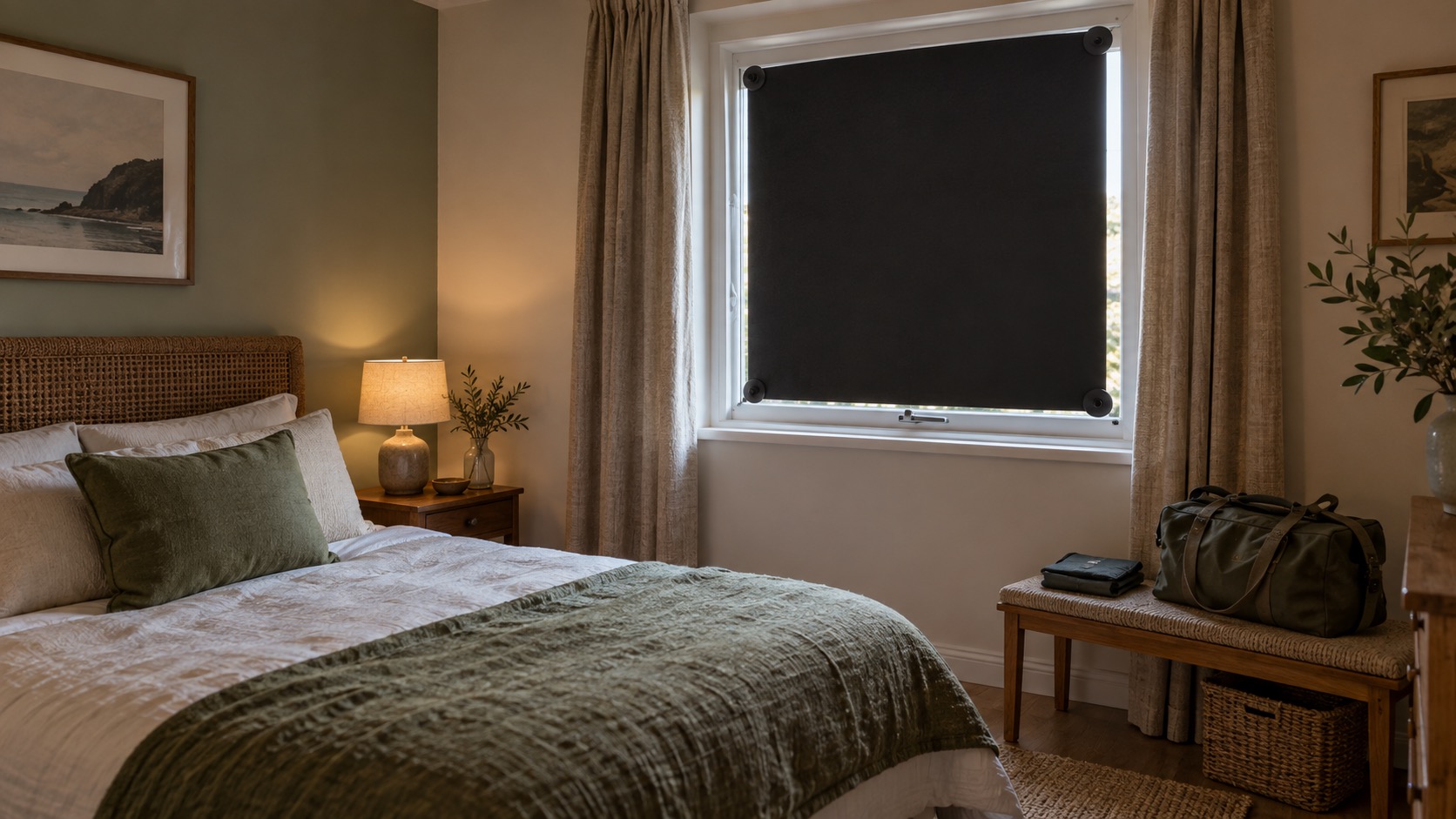
Pack away & take along
Compare portable blackout
Suction and removable covers for trips and occasional use, including attachment and size limits.
Read the portable buying guide →Start with your situation
Different rooms.
Different constraints.
A rental, a roof window and a daytime bedroom need different decisions. Go straight to the detail that changes your plan.
Explore all rooms & windows →I cannot drill into the window
Check removable attachment methods and what the frame can accept.
No-drill fitting adviceRenter-friendly optionsI need a darker room in daylight
Plan for direct light, perimeter gaps and a covering you can reopen easily.
Daytime bedroom planningOptions for shift workersMy window is an awkward shape
Identify the window system before buying a covering that cannot fit it.
Roof-window optionsBay-window planningI am planning a child's room
Put cord safety, furniture position and ventilation ahead of appearance.
Blind-cord safetyNursery room planningInteractive guide
See what edge coverage changes.
Choose a covering, then move the control from narrow coverage to a closer perimeter fit. The window and the blind drop stay the same size: only the illustrated routes around the sides change.
Make the covering work
The useful work happens around the edges.
Whether you are starting from scratch or improving what is already there, follow the window from measurement to everyday use.
All measuring, fitting & fixing guides →Measure before ordering
Separate the opening, cloth width and complete fitting dimensions.
Fit for coverage
Check brackets, handles, overlap and how the window opens.
Fix the light you can see
Locate the gap before adding another layer or changing the hardware.
Looped blind cords and chains are a hazard to young children. Keep cots, beds and climbable furniture away from blind cords, and fit every supplied safety device as instructed. The whole installation matters, not just the control label.
Our guidance follows the Office for Product Safety and Standards and the British Blind and Shutter Association. Keep access to daylight and ventilation part of your room plan.
Clear answers
Frequently asked questions
Short answers to the fitting, use and care questions that most often change the result.
Should I choose blackout blinds or blackout curtains?
A blind keeps the covering close to the window and can suit a compact space. Curtains need room for their width and stack, but can extend beyond the opening and cover gaps around an existing blind. Compare the fitting position, edges, controls and ventilation before choosing; neither format guarantees a dark room just because its fabric is labelled blackout.
Why does light still come around a blackout blind?
Opaque cloth can stop light passing through the material while leaving routes around the top, sides or bottom. Roller cloth is often narrower than the complete mechanism. Identify the bright edge before changing the blind: more overlap, a compatible tracked system or a well-positioned curtain layer may address different gaps.
Can I darken a rented room without drilling?
Suction covers, removable sheets and compatible tension or clip-in blinds are possible routes. Check the glass, frame, handles and opening method first. No-drill does not necessarily mean damage-free: adhesive can leave residue, pressure fittings need suitable surfaces, and permission may still be needed under your tenancy.
What matters most for a nursery or child's bedroom?
Consider control safety before colour or fabric. Looped blind cords and chains are a hazard to young children. Keep cots, beds and climbable furniture away from blind cords, fit every supplied safety device as instructed and preserve access to ventilation. A cordless design does not remove the need to check the whole installation.
Can blackout coverings help with daylight and streetlights?
Both call for opaque material and enough perimeter coverage, but the light path matters. Check the window when the unwanted light is present, looking at the top, sides, bottom and any nearby glazed door. Daytime use also needs a practical plan for opening the covering and ventilating the room; this is light-control advice, not a promise about sleep.
Still deciding where to begin? Compare curtains and blinds, or find a practical fitting guide.