
The short answer
Choose the safest control before the darkest fabric
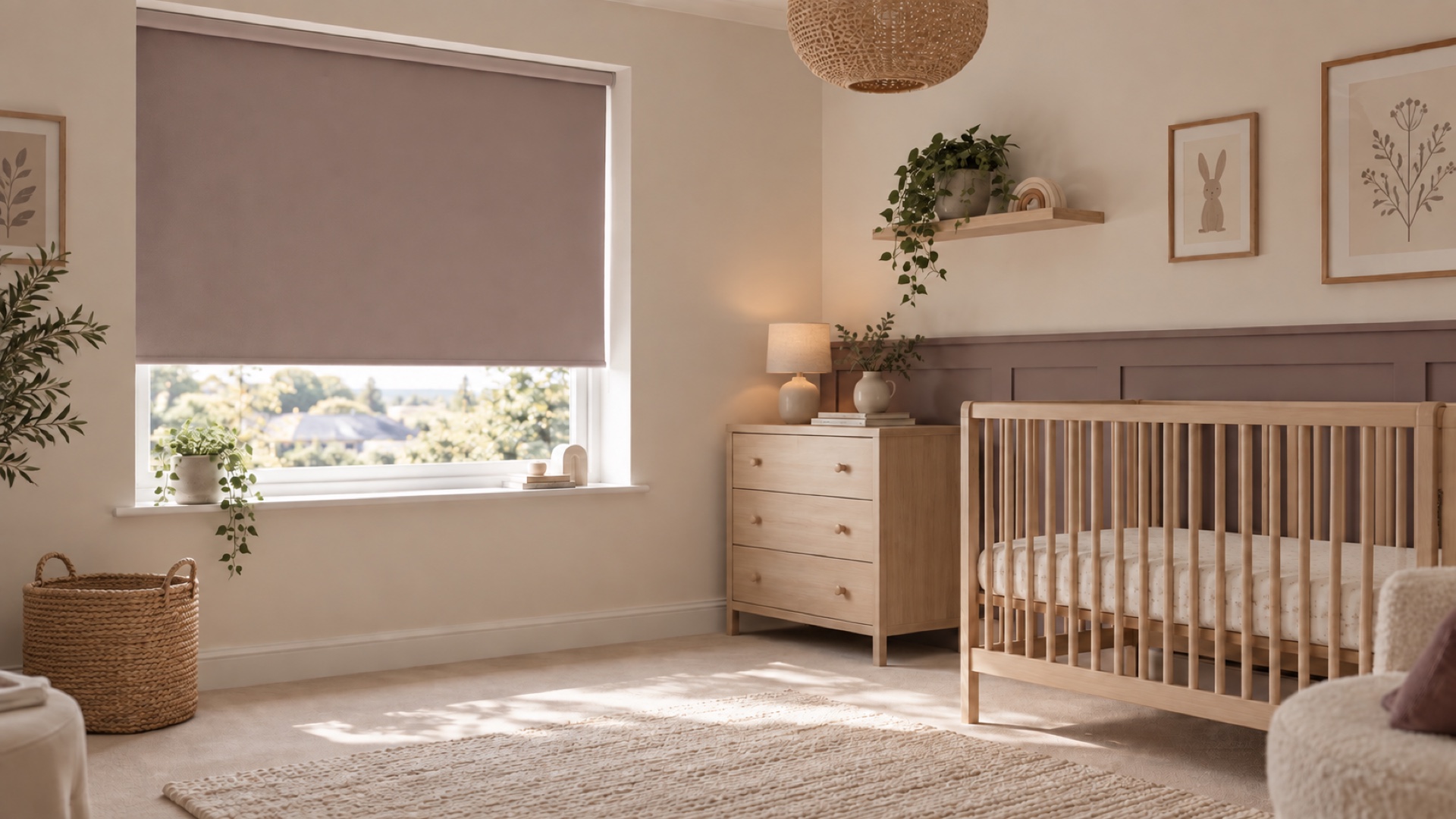
In a nursery, start with a safe-by-design cordless or concealed control and a secure installation. Keep the cot and climbable furniture away from the window. Then improve darkness with fit, overlap or a securely attached temporary layer.
UK guidance says blind cords and loops can endanger young children; prefer products without accessible loops.
“Cordless” does not certify every aspect of a product, so follow the full fitting instructions and inspect detachable parts.
Room darkening can support a consistent environment, but this guide does not claim to treat sleep problems or change infant sleep safety.
Product shortlist
Three nursery-relevant blackout options
These products illustrate a cordless shade and two portable covers. Suitability depends on the window, surface and whether every component can be kept secure and out of reach.
LazBlinds cordless no-drill blackout shade, black, 36 × 72 in
Best for: A window where a control loop is best avoided
A spring-operated cordless shade that attaches without conventional drilled brackets. It removes the hanging loop found on many ready-made rollers, but its stick-on installation still needs a compatible, clean surface.
What stands out
- Cordless spring operation
- No conventional drilling
- Opaque black fabric in the featured variant
Keep in mind
- A fixed ready-made width will not suit every recess
- Adhesive or pressure fittings still depend on the surface and instructions
- No-drill does not guarantee mark-free removal
- 36 × 72 in
- Cordless
- No-drill mounting
- Black
Tommee Tippee Sleeptight™ Portable Blackout Blind
Best for: Travel and occasional glass-mounted use
A foldable fabric cover that attaches to glass with suction cups and adjusts to the window. It is the most travel-oriented option here and avoids permanent fixings.
What stands out
- Packs away for travel
- Suction-cup fitting requires no drilling
- Adjustable fabric can accommodate different windows
Keep in mind
- Suction depends on clean, compatible glass
- Taking it down and refitting it adds daily effort
- It is a functional cover rather than a fitted interior blind
- Medium 99 × 130 cm
- Suction cups
- Packable
- Adjustable
Easynight Blackout Blind, regular 150 × 145 cm
Best for: A removable cover with generous edge overlap
A cut-to-size blackout sheet fixed around the window frame with removable hook-and-loop attachments. It can cover the complete opening more closely than an ordinary roller blind and packs into a storage bag between uses.
What stands out
- Can be cut for an unusual window shape
- Hook-and-loop attachment can reduce perimeter gaps
- No drilling and a storage bag is included
Keep in mind
- Adhesive suitability depends on the frame finish
- Less convenient than a blind for frequent daylight access
- The fabric can look utilitarian in a finished bedroom
- 150 × 145 cm
- Cut to size
- Hook-and-loop fixing
- Storage bag
At a glance
Safety is determined by the complete installation and room layout, not by a product title. Recheck the current instructions before fitting.
| Option | Control/fixing | Best use | Light-gap approach | Safety limitation |
|---|---|---|---|---|
| LazBlinds cordless | Spring control; no drill | A compatible everyday window | Roller coverage | No operating loop, but fit and surface remain critical |
| Tommee Tippee Sleeptight | Suction cups | Travel or occasional use | Fabric close to glass | Cups and loose edges must be secure and unreachable |
| Easynight regular | Hook-and-loop on frame | An awkward or larger opening | Trim-to-fit perimeter | Adhesive points and cut fabric require inspection |
OPSS states that blind cords and loops can pose a danger to young children, that tensioners and tidies must be firmly fixed, and that cots, beds, playpens, highchairs and climbable furniture should be moved away from the window. BBSA recommends blinds without operating cords or chains, or with concealed or permanently tensioned controls, especially where children live or visit.
Read the current GOV.UK blind-cord guidance and BBSA’s explanation of safe-by-design options.
Best everyday format here: a cordless spring shade
The LazBlinds shade removes the hanging loop by using a cordless spring mechanism. That is the key reason it belongs in this shortlist. It also uses a no-drill fitting, which can suit a compatible window where conventional brackets are not wanted.
The 36 × 72 inch ready-made variant must still cover the opening properly and attach securely. “No drill” does not mean the blind cannot fall or mark a surface, and “cordless” is not a blanket safety certification. Follow the current instructions, test the operation and keep the bottom bar and complete blind beyond the child’s reach.
Best portable option: Tommee Tippee Sleeptight
The medium Sleeptight attaches to glass with suction cups and packs away. It is practical for travel, temporary nursery use or a period before a permanent blind is fitted. Close-to-glass placement can cover bright side routes better than a narrow roller further into the room.
Every attachment point needs inspection. Clean the glass and cups, press each one as instructed and check that the panel cannot be pulled into the cot. Portable does not mean leave-and-forget: remove it if a cup loosens, fabric tears or condensation makes the installation unreliable.
Best trim-to-fit layer: Easynight
Easynight’s cut-to-size sheet can cover a larger or unusual opening using hook-and-loop attachments on a compatible frame. The perimeter coverage is its advantage; the adhesive and loose sheet are its nursery-specific cautions.
Do not place spare fasteners, cut strips or packaging in the room. Ensure all edges are secure and unreachable. Test the intended surface only in line with the instructions, because paint and varnish can lift during removal.
Why we did not recommend an ordinary chain roller first
A chain roller can comply with UK requirements when its supplied safety device is installed properly, and there are homes where it is the right choice. But for a new nursery installation, a safe-by-design cordless or concealed-control option removes the accessible loop rather than relying on future users always securing it. The child-safe blinds guide explains controls and installation; the blind-cord safety checklist is useful for existing blinds too.
If an existing blind has a chain, do not cut or improvise the mechanism. Fit the proper tensioner or cleat exactly as instructed, keep the control tight and inaccessible, and ask a competent blind professional for help if the product is old, incomplete or cannot be made secure.
How dark should a nursery be?
The practical target is controlled daylight, not a medical promise. Start with enough darkness for the household’s routine, then make sure the room remains easy to ventilate and supervise. Light around a roller blind is normal; it can be reduced by outside overlap, curtains or a close temporary perimeter.
Avoid claims that a blind will make a baby sleep for a particular duration or solve waking. Blackout products change light levels. They do not diagnose or treat sleep issues, and they do not replace NHS safer-sleep advice.
Heat, glazing and ventilation
GOV.UK hot-weather guidance for England recommends shading windows, but a nursery needs a wider heat plan. Close suitable coverings before strong sun reaches the glass, ventilate when the outside air is cooler and safe, and monitor the actual room conditions. Do not infer a guaranteed temperature drop from the word “blackout”.
Temporary panels sit close to glass, so follow all warnings for the glazing and product. Keep trickle vents usable, look for condensation behind the cover and remove it if the surface becomes unreliable. See nursery blackout and ventilation before leaving a tight-fitting cover in place for long periods.
The final five-minute safety audit
- Put the cot, bed and all climbable furniture well away from the window.
- Confirm there is no reachable loop, cord, chain, clip or loose fabric.
- Tug-test only as the manufacturer allows; the product must not shift in normal use.
- Open the covering and window, operate the handle and confirm ventilation remains available.
- Recheck the installation after cleaning, travel, redecorating or moving furniture.
Bottom line
The LazBlinds shade is the strongest everyday format in this shortlist because it avoids an operating loop. The Tommee Tippee is the travel-led choice, and Easynight offers broader trim-to-fit coverage. None should be chosen on darkness alone. The safest complete room is the one with an appropriate control, secure fixing, inaccessible components and furniture kept away from the window.
Clear answers
Frequently asked questions
Short answers to the fitting, use and care questions that most often change the result.
Are corded blinds illegal in a nursery?
UK rules do not make every corded blind illegal, but new looped products must have compliant safety measures. The BBSA recommends safe-by-design cordless, concealed or tensioned options, especially where young children live or visit.
Where should the cot go in relation to the window?
Keep the cot, bed, playpen, highchair and climbable furniture away from blind cords and the window. This follows current Office for Product Safety and Standards advice.
Is a suction-cup blackout blind safe for a baby’s room?
It avoids an operating cord, but cups, clips and fabric can still detach. Fit only as instructed, inspect it frequently and ensure the child cannot reach any part. Remove it if the fixing is unreliable.
Will a blackout blind make a baby sleep through the night?
No product can responsibly promise that. A darkened room may be useful for managing light, but infant sleep patterns have many causes. Follow NHS safer-sleep advice and seek professional help for health concerns.
Can a nursery blackout blind cover a trickle vent?
Do not permanently obstruct required ventilation. Keep vents usable and deal with condensation promptly. Choose a covering and position that allow the room to be aired.