
Why a window blind needs a safety check
The main child-safety issue is an accessible cord or chain that can form a loop. It may hang from a roller, Roman, vertical, venetian or pleated blind, or be hidden behind a curtain fitted later. Young children can reach a control from a cot, bed, chair or other furniture even when the control looks high to an adult. The Office for Product Safety and Standards (OPSS) guidance is the primary UK reference for practical household precautions. A window covering should never be judged on its blackout performance before this risk is resolved.
The British Blind and Shutter Association (BBSA) explains that blinds sold in the UK since February 2014 must comply with child-safety standards. Some designs avoid accessible operating cords; others use restricted cord lengths and supplied safety devices. Compliance at sale does not mean a tensioner can be left in the packet, attached with an unsuitable fixing or removed because it makes operation less convenient. Check the complete installation, not a product title or packaging badge.
This guide concerns blind cords and room layout. It does not replace a product's installation instructions, a professional inspection, or general baby safety advice. If you cannot identify a blind's control or a suitable device, stop using that control and ask the manufacturer or a competent fitter. Do not cut, shorten, knot or tape an unknown mechanism as a quick fix; changing one part can affect how the blind operates and whether its designed safety device works.
Choose safe-by-design controls; fit other devices correctly
The BBSA recommends safe-by-design products, particularly where young children live or visit. Cordless spring rollers, some wand or crank controls and properly specified motorised designs are examples of ways to avoid an accessible operating loop. “Cordless” describes a control method, not a guarantee that a whole room is safe. Confirm mounting strength, reachable loose parts and the operating method of any other blind at the same window. Our cordless-blind guide describes the differences without presenting an unverified product as universally child-safe.
For a corded product, follow its own safety-device instructions. OPSS says tidies and tensioners should be firmly fixed to an adjacent surface so a chain or cord stays tight. Cleats should be out of children's reach on an adjacent surface at least 1.5 metres above the floor. After each use, secure all spare cord on the cleat in a figure of eight. That height is not a safe distance from a cot: a climbing child and room furniture change reach. A safety device is only useful if it is correctly fitted and actually used.
| Control or device | What to inspect | Common mistake |
|---|---|---|
| Cordless or wand control | No accessible operating loop; secure fixing | Assuming another old blind at the same window is harmless |
| Tensioner or tidy | Correctly installed on sound adjacent surface | Leaving it loose or unfixed |
| Cleat | Out of reach, at least 1.5 m above floor, cord stored after use | Treating the height as permission to put a cot nearby |
| Breakaway device | Compatible with the blind and installed as specified | Replacing it with an arbitrary knot or clip |
Inspect the room from a child's reach, not an adult's
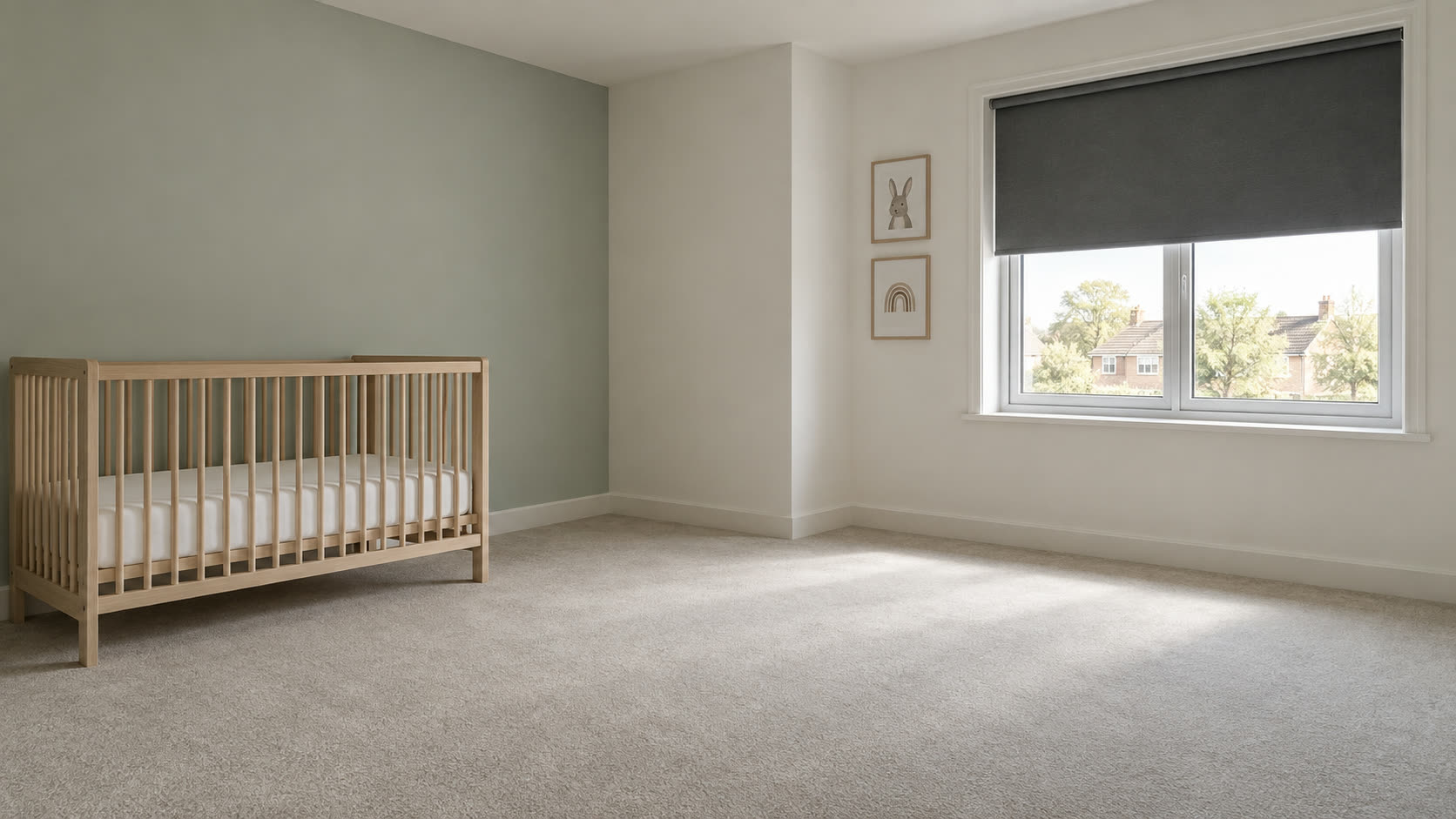
OPSS says to move furniture away from blinds, naming cots, beds, highchairs and playpens. Include chairs, storage cubes and low bookcases in your own scan because a child may use them to climb. Look at where the furniture could be moved next month, not only where it stands today. Check the blind with fabric fully raised and fully lowered; loops can shift position. If a curtain hides the cord, open it and inspect behind. The cot and furniture guide gives a room-layout method without inventing a universal clearance measurement.
Do the same check at grandparents' houses, holiday lets and hotel rooms. A child may use a guest room only a few nights a year, but a seldom-used older blind may have a long unsecured cord. A portable blackout panel over that window does not neutralise the underlying mechanism. If you cannot make the room safe, use a different room or ask the owner to correct the blind. Keep small removable fittings from temporary shades out of reach too; they introduce a different hazard.
Keep window opening and ventilation practical while resolving light. A blind that is dark but prevents a safe opening or hides a vent is not a complete solution. If the nursery gets warm, follow NHS advice on babies and hot weather rather than assuming blackout cloth sets a safe temperature. The aim is a usable room with controlled daylight and accessible safety features, not darkness at any cost.
What to do with an older or uncertain blind
The BBSA notes that pre-February-2014 blinds may have hazardous loops and provides type-specific advice for older rollers, Romans, pleated, vertical and venetian blinds. Identify the blind type and maker if possible. Check for an existing but unfitted safety device, missing screws, a broken breakaway or a loose cleat. If the instructions are available, follow the exact fixing and control guidance. If not, ask the maker or a blind professional which device is compatible. A generic accessory picked only because it looks similar is not proof of compatibility.
If replacing the blind is feasible, choose an operating method that avoids an accessible loop and still fits the window. Compare the complete hardware, fixing surface and side-light result; an ordinary cordless roller may still leave edge gaps. If the window is in a rental or visiting home, coordinate with the person responsible for the property. Do not alter their blind without permission, and do not hide a known hazard behind a new temporary covering.
Make the inspection repeatable. At each window, record the blind type, whether a loop is accessible, which specified device is installed, whether it is secure, and which furniture could put a child within reach. Recheck after redecorating, moving furniture, changing bedrooms or removing a temporary shade. Our existing-blind safety guide walks through that process in more detail. If there is immediate access to an unsafe loop, address that access before focusing on light leakage or product choice.