
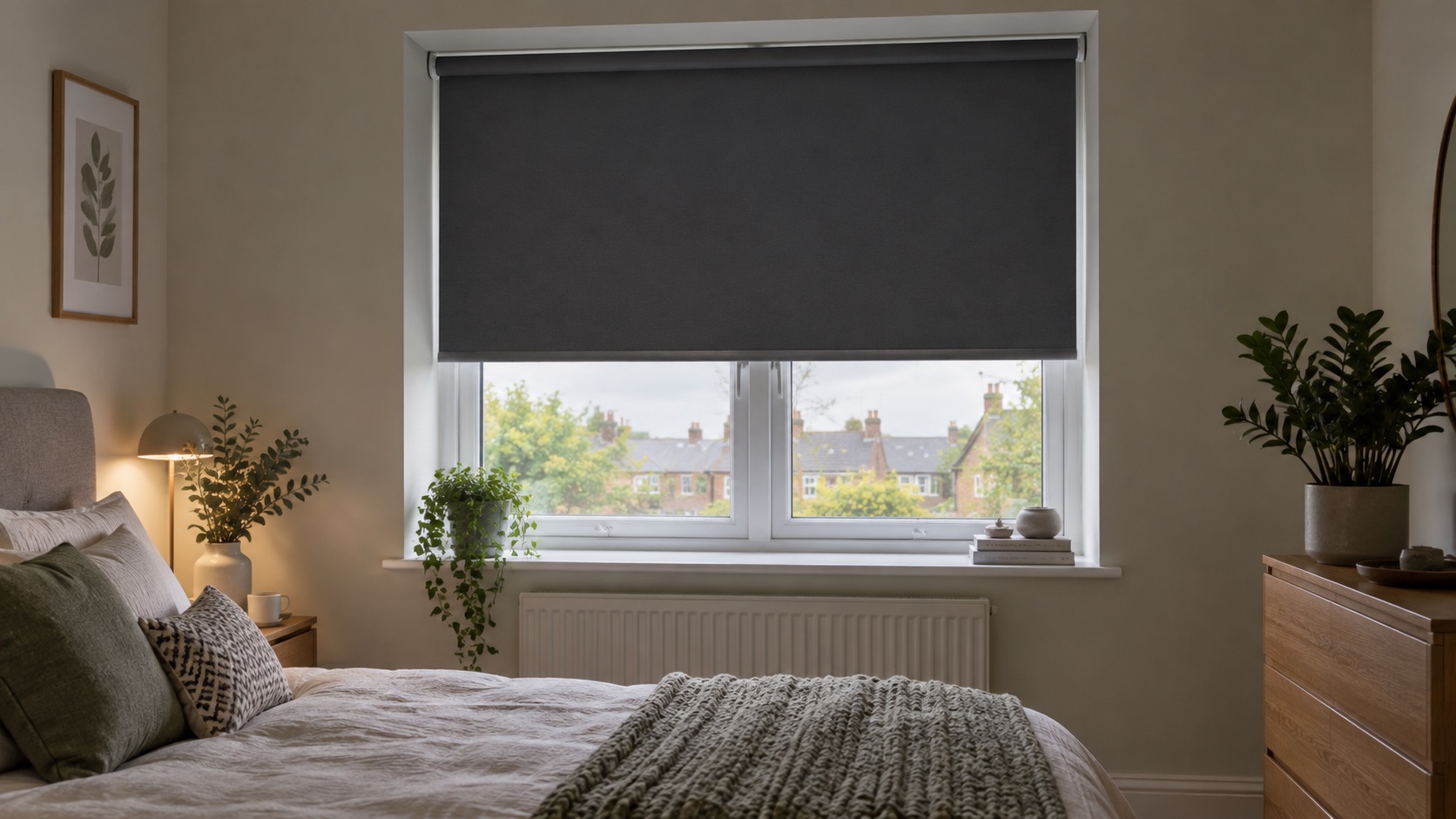
What the twist actually does
Twist-fit blinds use an adjustable headrail or fitting that presses against two opposing sides of a recess. The twist or tension action replaces normal screw-fixed brackets. It is a fitting method, not a fabric type: a twist-fit product can still use a roller cloth with normal side clearance. Suppliers use related names for differing mechanisms, so follow the selected product's installation drawing rather than assuming all “no-drill” systems work alike. Blinds2go's fitting-system comparison illustrates how twist-fit differs from clip-in and stick-on methods.
Unlike an adhesive shade, a pressure-held headrail relies on the strength and shape of the reveal. Unlike a bead-clipped frame, it does not usually travel with an opening sash. Those distinctions matter to renters and to anyone who opens the window frequently. Our no-drill blind guide compares the larger family of methods.
A sound, square recess matters
Measure width at top, middle and bottom, then compare the maker's permitted range and adjustment. Check that the top fixing surfaces are firm, parallel enough and free from loose paint, flaking plaster, tile edges or projecting trim. The blind's weight and the force of raising it will act on the fitting repeatedly. A headrail that seems secure when still may slip under use if the material beneath its pads is weak.
Do a window-operation check before ordering. Inward-opening sashes, handles and trickle vents may need clearance behind or below the headrail. A shallow recess can place the roll close to the room edge. If the window must open for ventilation or as an escape route, ensure the blind can be raised or moved without obstruction. Use our recess measuring guide to record these constraints.
| Check | Why it matters |
|---|---|
| Top-width range | Determines whether the tension mechanism can engage |
| Surface strength | Weak paint or plaster may let the headrail move |
| Recess depth | The roll must clear sash, handle and vent |
| Cloth width | A well-gripped blind can still leak light at the sides |
Fit and removal without false reassurance
Follow the maker's sequence for extending, levelling and locking the headrail. Do not wedge packing into a mechanism unless the instructions allow it. Operate the blind through its full travel and recheck grip after initial use. If it shifts, remove it and reassess the surface and size rather than tightening beyond the stated limit. Before removal, support the blind so a sudden release cannot drop it onto a sill or person.
No-drill does not equal mark-free. Pressure pads can leave impressions, and older paint can detach. A renter should check tenancy terms and photograph the finish before fitting. If a looped chain is supplied, follow the OPSS blind-cord safety guidance; a no-drill headrail does not eliminate cord risk. For a room where the main problem is side light, compare an outside-fit blind or side-guided system rather than relying on a twist-fit label.
When another no-drill method is more suitable
A twist-fit headrail is not the best answer for every rental. If the recess walls are weak but the uPVC glazing beads are compatible, a properly matched sash-mounted frame may avoid loading the plaster. If the window frame is smooth and temporary darkening is all that is needed, a removable fabric panel may be more forgiving of an odd-shaped opening, though adhesive and suction have their own failure modes. If daily raising matters, a stable roller may justify landlord permission for properly installed brackets. Compare how each method is supported, how it is removed, and what surface is at risk. The renter-friendly options guide covers those trade-offs in one place; the least invasive-looking option is not automatically the most secure or easiest to restore.
For a long drop, also check whether the blind can stay straight while moving. A headrail that is level at installation but shifts under repeated pulls can make fabric track to one side. Stop using an unstable fitting and follow the maker's adjustment or removal instructions instead of adding improvised wedges.