
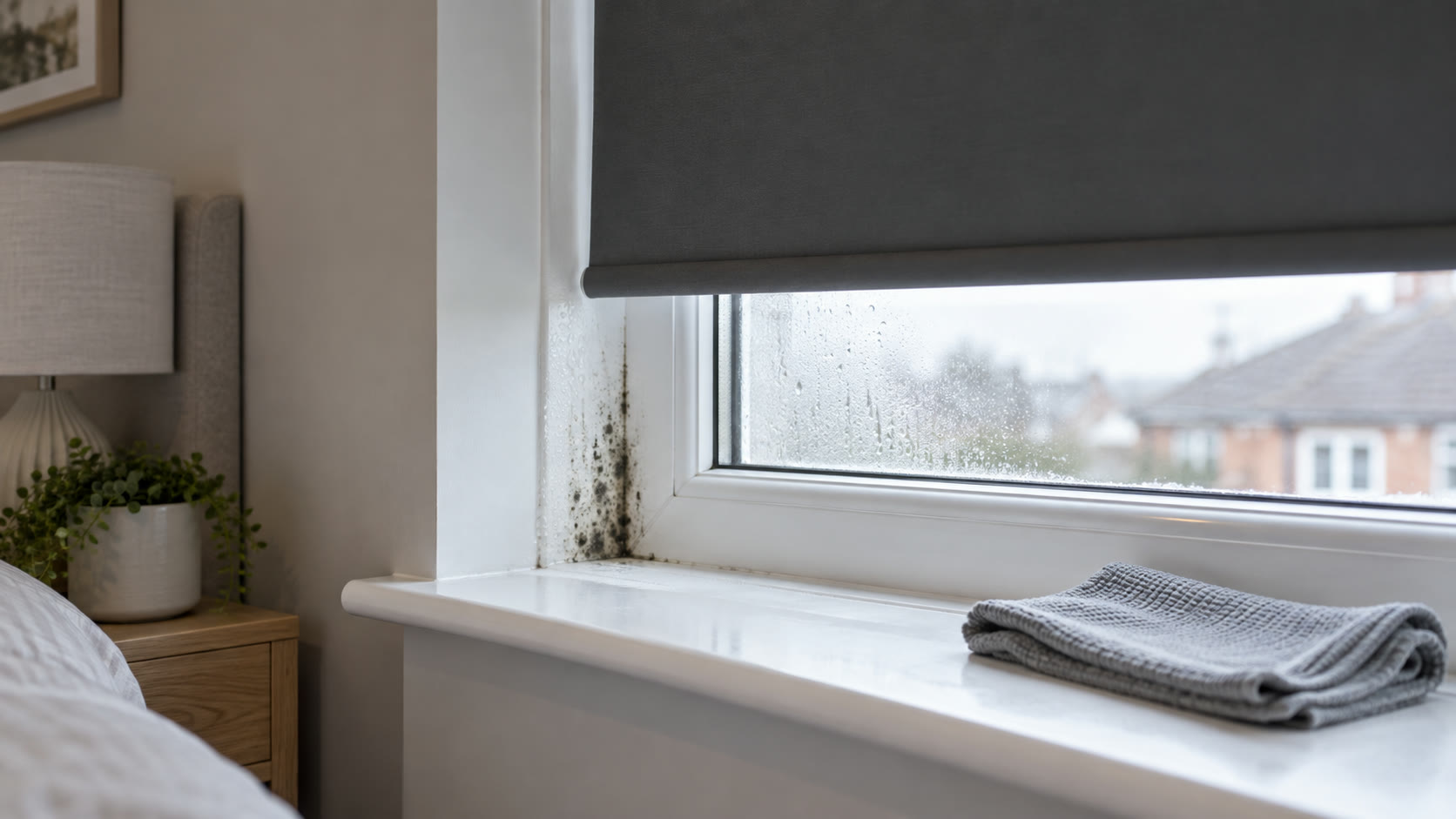
Check where the mould actually is
Mould near a blackout blind is usually a moisture problem at the window, not proof that the blind itself is faulty. It may be on the uPVC frame, painted reveal, rubber seal, fabric face, rear coating, bottom bar or the wall hidden by the blind. The treatment differs for each. Photograph the area before cleaning, note whether the window is wet in the morning and inspect for a leaking frame or roof junction. If a blind conceals the area, open it regularly to see what is happening behind it.
The current GOV.UK guidance on damp and mould in the home stresses that mould removal and identifying the underlying cause belong together. It says hard surfaces can be cleaned with an appropriate product and left to dry completely, while absorbent materials can be difficult or impossible to clean fully. It also advises qualified professionals for larger areas. This is a more reliable starting point than assuming a spray can restore any blind.
Check the extent without rubbing the patch. A small mark on a hard sill is different from widespread growth on an absorbent pleated blind or behind wallpaper. If someone in the home has a condition that makes mould exposure a particular concern, or the area is extensive, seek appropriate professional and healthcare advice rather than treating it as a routine blind-cleaning job. Avoid disturbing material that may release spores. Do not mix cleaning chemicals.
Match the response to the material
For a small amount on a hard frame, follow the cleaning product's instructions, protect yourself as directed and dry the area fully. Current UK housing guidance recommends a suitable mould-and-mildew product rather than bleach and describes gloves, a mask and eye protection for removal work. Keep the room ventilated during and after cleaning and dispose of used materials carefully. If the mould extends into seals, plaster or an inaccessible joint, the surface wipe may not resolve it.
For blind fabric, read the exact care label first. A coated roller may be damaged by soaking, abrasive scrubbing, solvents or a strongly alkaline cleaner. Spot cleaning a surface mark may be possible where the maker permits it; an embedded stain or widespread growth in the coating may not be recoverable. A pleated or cellular blind has internal folds that are hard to reach and dry. Do not saturate its cells or mechanisms in the hope of disinfecting them. If the blind is significantly affected, replacement may be safer and more realistic than attempting to restore every layer.
| Where the mould is | First response | Avoid |
|---|---|---|
| Hard sill or frame | Use an appropriate product as directed and dry completely | Treating the blind while ignoring the wet frame |
| Small mark on coated roller | Check the exact maker's care instructions before spot cleaning | Soaking, scrubbing or mixing chemicals |
| Pleated or cellular folds | Assess whether the material can be safely cleaned and dried | Flooding internal cells with liquid |
| Large or recurrent area | Get the moisture source and contamination assessed | Repeated cosmetic wiping as the only action |
Our roller-blind cleaning guide covers routine dust and small marks on an otherwise sound blind. Routine cleaning is not the same as mould remediation. If the fabric is being replaced, photograph the old installation and measure afresh rather than ordering solely from the previous product's labelled width.
Stop water collecting behind the new or cleaned blind
Condensation forms when moisture-laden air meets a cold surface. A close-fitting blind can conceal a wet pane, but removing the blind does not automatically cure the conditions that made the glass wet. Inspect and dry visible condensation, use existing extract ventilation and keep background vents working as intended. The GOV.UK existing-home ventilation guide for England explains why moisture and pollutants build up when ventilation is inadequate. Do not block trickle vents with foam or tape to pursue more darkness.
If water enters around a frame, rooflight or wall, report and repair the leak. If there is a persistent cold spot, inadequate heating or recurring condensation, get the property assessed. In rented homes, document the problem and inform the landlord or agent promptly; cleaning the blind should not substitute for addressing a property defect. Government guidance explicitly warns against blaming residents' ordinary domestic activities for underlying building, ventilation or heating deficiencies.
When choosing a replacement, leave enough practical access to inspect the glazing and sill. A removable panel can be taken down, but its hook-and-loop tape can also hide a damp edge if left untouched. A tracked cassette may look neater yet make the channel harder to clean. No blind is maintenance-free in a damp window. Choose one you can open, inspect and care for according to the maker's instructions, then keep a simple habit of checking the window after cold nights. For installation options, see blackout blind side tracks and how to choose blackout curtains, while remembering that a new covering is not a mould treatment.