
Before cleaning: identify the fabric
Find the care label, order confirmation or manufacturer’s instructions. Blackout rollers can be coated polyester, laminated fabric, PVC, vinyl or another treated material. The same dark appearance does not mean the same cleaning tolerance.
If the material is unknown, use the gentlest route: dry dusting, minimal pressure and no chemical. Test any permitted damp method on an inconspicuous lower corner and let it dry before treating a visible mark. Protect the sill and wall from drips.
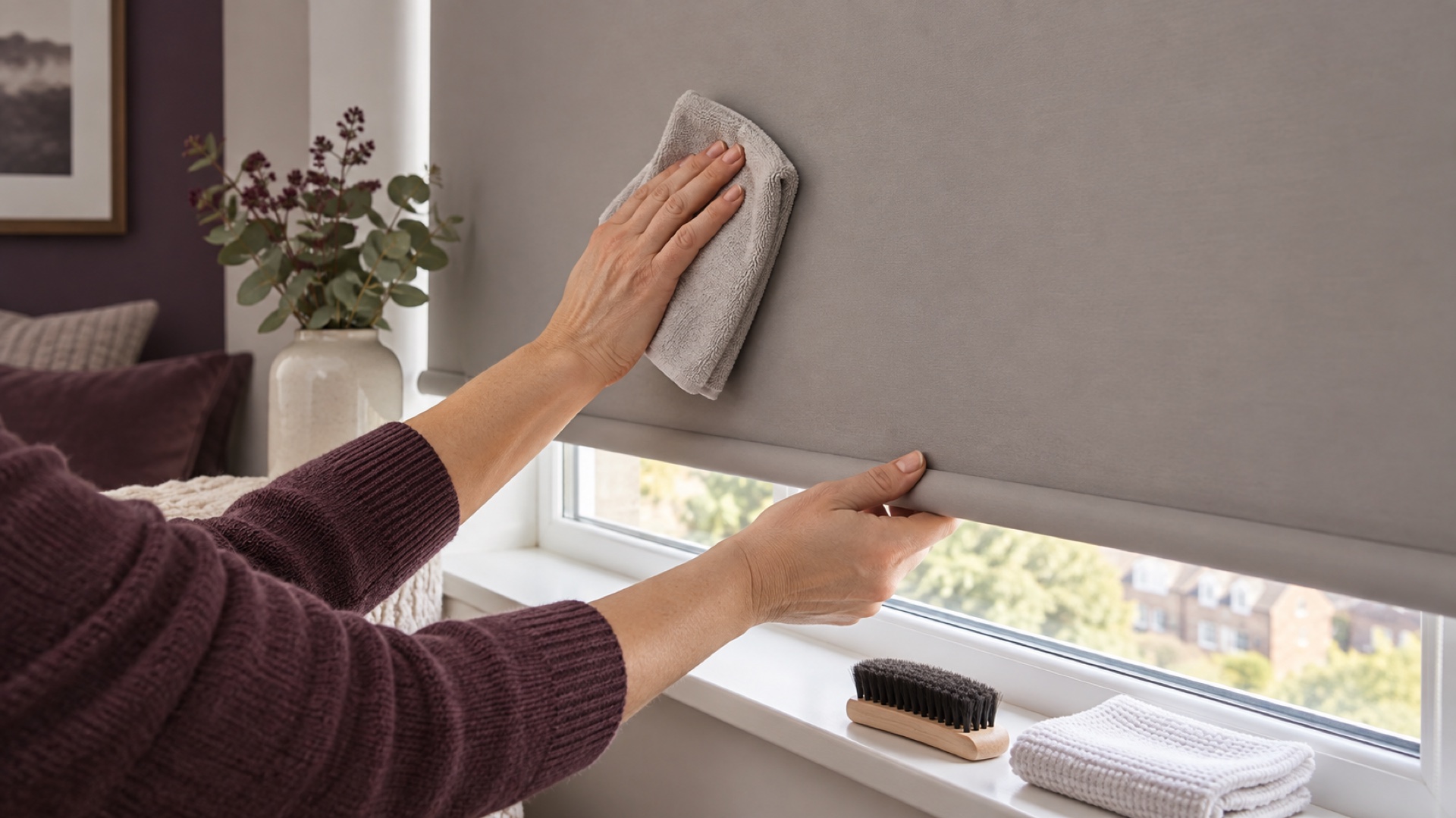
Lower the blind completely on a calm day, wash your hands and remove rings or tools that could catch the cloth. Support the bottom bar rather than pulling against the mechanism.
Routine dusting without creases
Use a clean, dry microfibre cloth and work from top to bottom with light strokes. Alternatively, use a vacuum upholstery brush on low suction while supporting the fabric. Keep the nozzle moving and do not draw the cloth into the vacuum.
Dust both sides if accessible. Pay attention to the top edge, bottom bar and bracket covers, where horizontal surfaces collect more debris. A small clean soft brush can reach the end fittings, but do not push dust into the chain or spring mechanism.
Regular dry care reduces the need for wet cleaning. It also makes a new mark easier to identify and treat promptly.
Spot-clean marks cautiously
If the label permits moisture, dampen a white lint-free cloth with lukewarm water and wring it thoroughly. Blot the mark instead of scrubbing. Work from the edge towards the centre so the stain is not spread. Use only a mild product approved by the blind maker, and never combine chemicals.
Current roller-blind care guidance from Blinds 2go recommends lowering the blind fully, removing dust gently, spot-testing and letting the fabric dry before rolling it up. The common principle is to follow the actual material and its own care label rather than a universal social-media cleaning trick.
Do not soak coated polyester, use abrasive pads, apply steam or press a hot iron against the backing. Excess water can affect stiffness and leave tide marks. Heat can distort or separate layers.
After cleaning, leave the blind fully down with air circulating around it. Do not roll it until both faces and the lower hem are completely dry.
Mould, condensation and odour
Visible mould is not only a cleaning problem. Check the window seals, trickle vents, room humidity and whether the blind is repeatedly rolled while damp. Clean condensation from the glass and sill and ventilate the room appropriately. The mould-on-blinds guide separates surface care from a moisture problem; the condensation guide addresses the window conditions.
Use only a mould treatment approved for the exact fabric. Bleach and strong mould sprays can remove colour or damage a blackout coating. If the growth is extensive, has penetrated a porous blind or returns quickly, replacement and investigation of the moisture source may be more sensible than repeated aggressive cleaning.
Do not dry-brush active mould in a way that spreads spores through an occupied room. People with health concerns should follow appropriate NHS or professional advice; this page is product-care guidance, not a health treatment plan.
Clean the chain and mechanism safely
Wipe an accessible plastic chain with a barely damp cloth only if the instructions allow it, then dry it. Do not lubricate, dismantle or spray cleaner into the control end unless the manufacturer specifies a product and method. Aerosol overspray can stain the cloth and make a floor slippery.
Inspect the chain tensioner, cleat or other safety device while you work. It must remain firmly fixed and keep the loop safely managed, as required by current UK blind-cord guidance. If it is loose or damaged, stop using the blind and obtain the correct replacement. Never remove a safety device for cleaning and leave it off.
For a cordless spring blind, keep moisture away from the tube and mechanism. If the blind no longer holds its position or retracts violently, cleaning will not fix it; consult the supplier. For fitting or control issues, use the roller installation guide rather than treating them as cleaning faults.
What not to do
- Do not machine-wash a complete roller blind unless its maker explicitly says you can.
- Do not soak an unknown coated fabric in the bath.
- Do not use bleach, solvents, abrasive paste or a steam cleaner without approval.
- Do not scrub one patch so hard that its sheen differs from the rest.
- Do not roll the fabric while damp.
- Do not detach or weaken a cord-safety device.
With routine dry dusting and restrained spot care, most bedroom roller blinds need little intervention. When the label conflicts with generic advice, the label wins.