
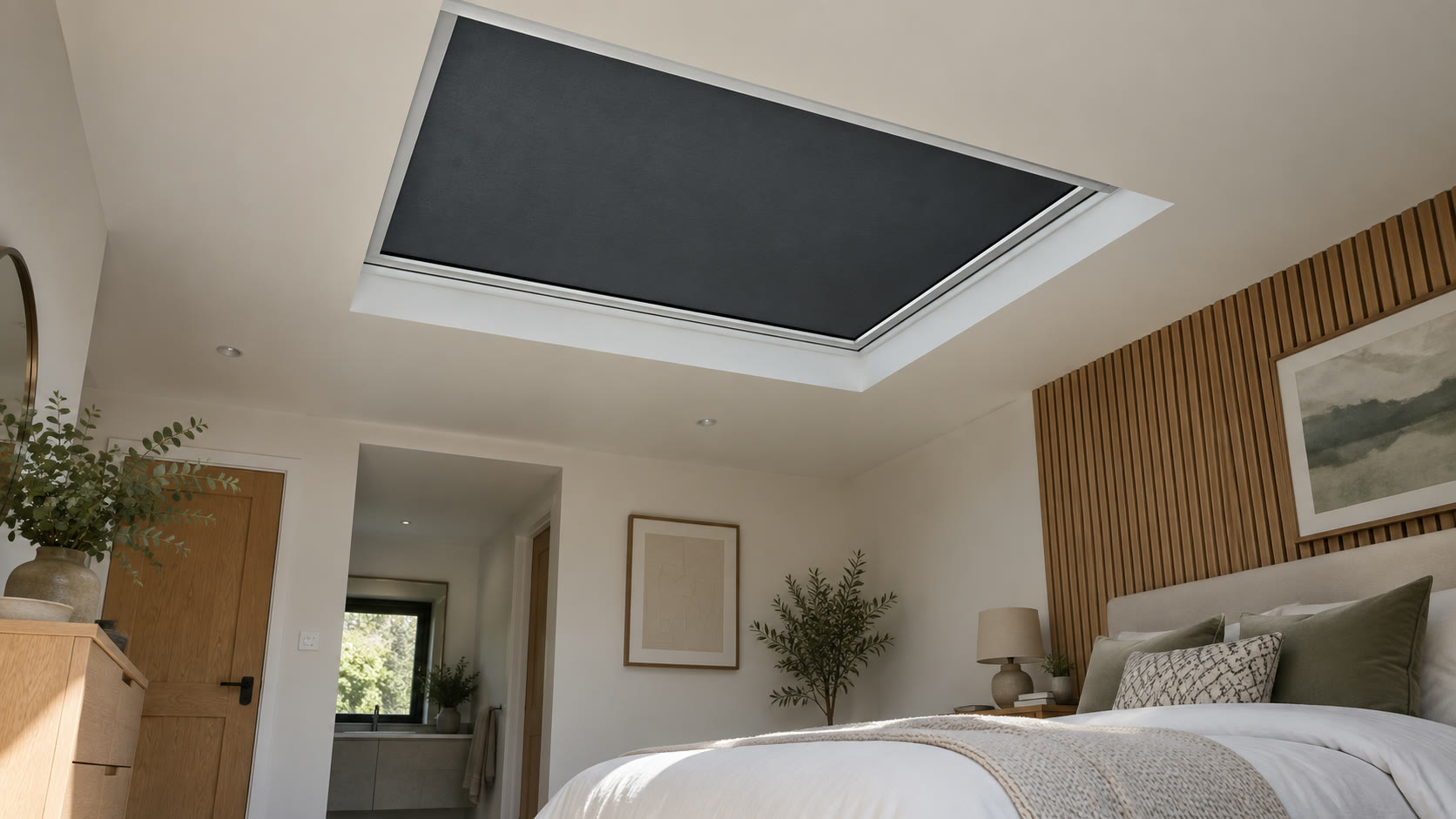
Start with the type plate and rooflight generation
A flat rooflight is not simply a pitched roof window turned horizontal. Its frame, glazing cover, opening mechanism and accessory route can differ substantially. A blind sold for a VELUX MK04 sloping window, for example, should not be bought for a flat-roof unit because the size looks similar. The VELUX flat-roof blind range separates blinds for new-generation glass rooflights from those for domes with glazing. That distinction is the first decision, before fabric colour or control type.
Find the manufacturer's name, window family, type code and size code from the type plate, order paperwork or installer. Record the visible glazing and the surrounding frame, but do not substitute a tape measurement for the code when the maker specifies code-based ordering. A rooflight replaced during a renovation may have a newer base unit under an older-looking cover, so installation date alone is not enough. If the type plate is difficult to reach, use a safe vantage point and ask the maker or installer to identify the unit from photographs. Do not lean out onto the roof or dismantle glazing to read a label.
The supplier's compatibility list should name the exact family, not merely say “fits VELUX” or “roof-window blind”. Check both letters and numbers. For example, VELUX identifies its new-generation curved- and flat-glass blackout blind with CFU/CVU units; its dome-with-glazing range is a different route. This is why a generic marketplace photograph is a poor basis for a purchase.
Choose the system by glazing and access
Flat rooflights can use different light-control arrangements. A dedicated blackout blind may sit below the glazing within its own guides. A pleated energy blind is another option for some dome-with-glazing systems. Exterior anti-heat products are not automatically blackout: VELUX describes certain outside solutions as semi-transparent and intended for heat or glare management. The VELUX blackout-blind overview lists the respective families, while its flat-roof support page links to installation instructions for compatible products.
Decide whether you need a room-darkening accessory, solar shading, privacy during the day or a combination. A semi-transparent external screen can be useful for glare without making the room dark. Conversely, an interior blackout accessory controls light but does not justify a claim that it will lower the room temperature by a set amount or save a fixed sum on energy. If heat is also a concern, consider the whole rooflight, orientation and ventilation separately.
Control is another practical distinction. A high ceiling may make a manual handle inconvenient, while electric or solar operation adds compatibility and maintenance questions. Check whether the blind needs a power source, a wall switch, a remote or access for a battery or solar component. If you already have a powered opening window, do not assume every blind integrates with its controls. Confirm the exact accessory and generation with the manufacturer.
| Rooflight type | Accessory question | Common mistake |
|---|---|---|
| New-generation flat or curved glass | Is the blind stated for the precise CFU/CVU family and size? | Buying an accessory for an older dome system |
| Dome with glazing | Is the blind compatible with this dome and base window? | Treating an exterior dimming screen as blackout |
| Pitched roof window | What is the sash code and blind code? | Assuming a pitched-roof rail kit fits a flat-roof unit |
Plan the installation before you order
Measure the room-side reveal and note any lighting, coving, curtain track or furniture that affects access. A blind may sit inside the rooflight assembly rather than on the room ceiling; a decorative ceiling reveal can therefore hide the actual mounting point. Read the installation drawing for the specific accessory and check the clearance needed by the blind when retracted. A small rooflight in a high stairwell can be much harder to service than one above a reachable bed, even if the accessory is technically compatible.
Do not screw into glazing, waterproofing or a frame section not designated by the maker. Rooflights are part of a weatherproof roof assembly. A mistaken fixing can affect seals or drainage and may be expensive to repair. Where access requires a ladder near a void, roof work, or electrical changes, use a competent professional. Keep a record of the installed window code and blind part number for future maintenance.
Check how the window opens with the blind fitted. A blind must not obstruct required ventilation or a route intended for emergency use. Condensation also deserves attention: inspect the glazing and frame periodically rather than leaving a shade permanently closed over a damp area. The GOV.UK existing-home ventilation guide for England explains why moisture management and unblocked ventilation remain important. In children's rooms, check any reachable cords or controls against the OPSS blind-cord advice.
For an unidentified flat rooflight, the safest buying route is the manufacturer's code-matched accessory or an installer who will confirm the fit in writing. If your window is actually on a sloping roof, use our roof-window guide and VELUX code guide instead. For a vertical window elsewhere in the same room, a side-tracked blackout blind may address that separate light path.