
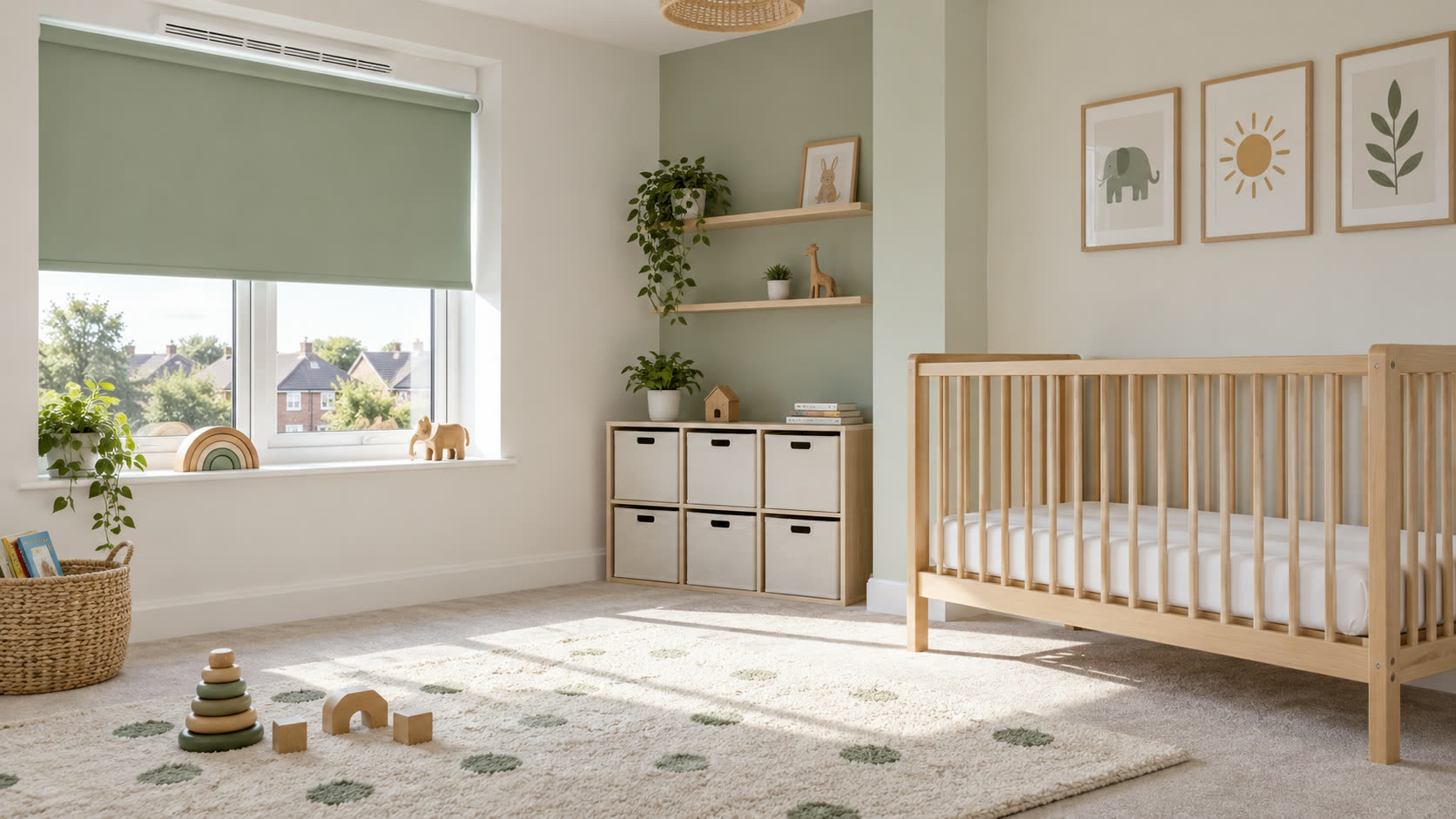
Light control, air and comfort are different jobs
A nursery window covering may make a room darker, but an opaque fabric does not by itself set air quality or temperature. The NHS guidance on babies in hot weather includes closing blinds or curtains during the day as one way to shade a room and checking a baby's comfort. It also discusses safe ventilation and monitoring room conditions. Do not translate that into a fixed temperature reduction from a particular blind, or into a promise that darkness improves sleep. The covering's primary job is to manage incoming light while other safety features continue to work.
The government's existing-home ventilation guide, written for England, explains the importance of keeping ventilation paths functional, including trickle vents. The principle is useful when planning a window treatment: identify a vent before placing a cassette, adhesive strip or fabric panel. Do not seal the top of the reveal for a darker photograph if that covers the air inlet. If the room has persistent condensation, mould, stale air or a malfunctioning vent, address the building issue rather than adding another airtight layer over the glass.
Room temperature must be checked independently of fabric colour or product claims. The NHS newborn temperature guidance explains the risks of overheating and suitable baby clothing and bedding. This site does not give medical or sleep advice; use NHS guidance or a healthcare professional for those questions. A blind can shade a pane, but sun angle, glazing, outside temperature, ventilation and other room factors all change the result.
Draw the window before ordering anything
Mark the clear glass, inside reveal, trickle vent, opening direction, handles and any safety restrictor. Open the sash as it is normally used and note the space it needs. Then mark where a proposed blind headrail, fabric edge and fixing would sit. A roller mounted high above the opening may leave the vent clear; a cassette tight to the frame may not. A suction panel on glass can be removable but may obstruct a handle or need taking down for window access. The exact fit matters more than a generic “nursery blackout” label.
Check the existing blind or curtain too. The Office for Product Safety and Standards warns about accessible blind cords and advises keeping cots and other furniture away from blinds. The BBSA recommends safe-by-design operating methods in homes with children. A new curtain in front of an older chain blind does not remove the chain. If the control is hazardous, address it first with the correct device or replacement. Our blind-cord guide explains the practical checks.
| Window feature | What to preserve | What to avoid |
|---|---|---|
| Trickle vent | Normal designed airflow | Covering it with a headrail or adhesive seal |
| Opening sash | Safe usable opening path | Fabric that catches the handle or hinge |
| Restrictor | Access for inspection and operation | Concealing it behind a fixed panel |
| Blind control | Safe-by-design or correct safety device | Accessible hanging loop near furniture |
Choose a covering that leaves the essentials accessible
A securely fitted cordless roller may be suitable where the headrail clears the vent and the fabric does not interfere with the sash. Expect some side light unless the fabric overlaps or a compatible frame system manages the edge. A framed or track-guided blind may give closer coverage, but exact frame compatibility and access to hardware become more important. Curtains can span a wider opening and be drawn back for ventilation, provided the pole is securely fitted and fabric is kept away from the cot. Our nursery blind guide compares these format choices with child safety in view.
Temporary stick-on or suction panels can help in a borrowed nursery, but removable does not mean they may cover vents. Adhesive can affect a finish; suction needs smooth compatible glass; loose cups and strips must be kept away from children. A panel fitted only for certain daytime periods can be taken down when the window needs normal operation. If the chosen product cannot be used without obstructing a vent or safe opening, it is the wrong product for that window. Do not override the room's ventilation to chase a completely black photograph.
A simple daily room check
Before closing the covering, look at the vent, handle and blind control. Check that the cot and climbable furniture remain away from the window. Make sure an adhesive or suction attachment has not loosened and that no piece can fall into the cot area. Notice condensation on the glazing or frame, which may indicate a moisture or ventilation issue requiring attention. Check the room's comfort with an appropriate method rather than assuming the covering has changed it in a predictable way.
If the room becomes too warm, follow the NHS guidance linked above; if ventilation appears inadequate, seek advice appropriate to the building and window. Keep the window-covering plan adjustable so the room can be used normally across seasons. A nursery that is a little less dark but has safe controls, clear airflow and practical access is preferable to a sealed, hard-to-operate window. Review the fit when a child grows, furniture moves or a new blind is installed.