
What the curved end changes
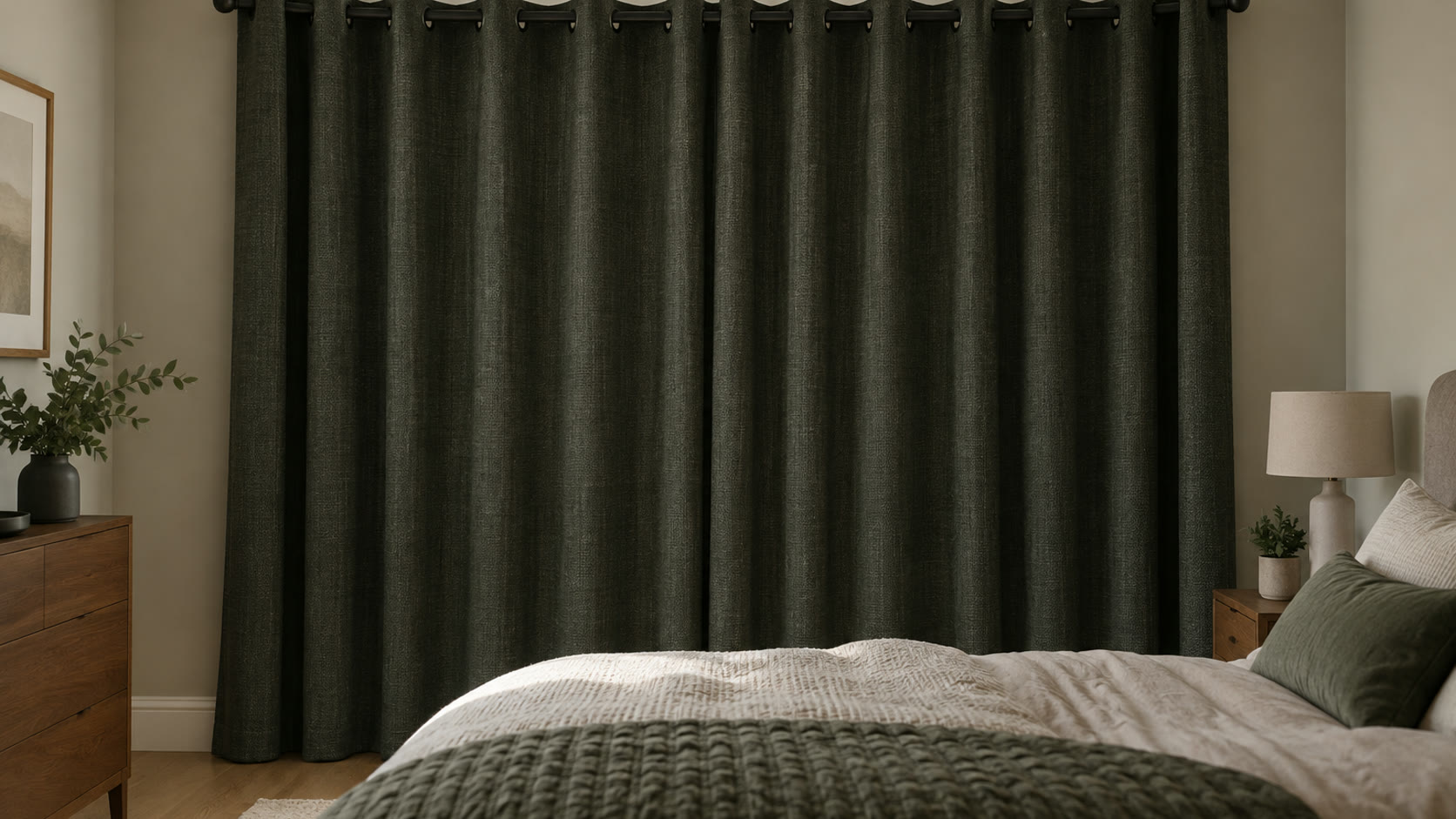
A conventional straight pole may leave the outer curtain edge several centimetres from the wall. From a bed at an angle, daylight can travel through that side passage even when the face fabric is opaque. A wraparound or French-return pole bends back toward the wall at each end. With enough fabric and a compatible heading, the outer fold can follow that curve and reduce the direct view of the window edge.
French-return pole guidance shows the distinctive return-to-wall shape. The idea is simple, but the result is not automatic: a curtain that is too narrow may pull away from the return when closed, and a deep bracket may still leave a gap behind the fabric. The rod changes the route at the sides, not the opacity of the cloth or the centre join.
This is most useful when your current side glow remains after the pole already extends well beyond the opening. Before replacing hardware, hold the outer curtain edge towards the wall and see whether the bright line diminishes. If it does not, the dominant leak may be above, below or through the fabric instead. Our side-gap guide helps diagnose that.
Measure the span and load, then plan the fixing
Measure the window and mark how far the pole should extend beyond each side. John Lewis's curtain guidance suggests about 15–20 cm each side as a familiar starting allowance. Check the actual curved return and the usable straight run of the selected model; its advertised adjustable length may not equal the space available for curtain rings. Confirm that the return will not strike a wardrobe, radiator pipe or adjacent wall.
Heavy lined curtains place more load on the pole and brackets than a lightweight voile. Read the rod's support instructions, especially at the longest extension. A centre bracket may be compulsory and can affect whether one panel traverses the whole width. Identify whether you are fixing into solid masonry, timber or another substrate and choose suitable anchors. Check for hidden services before drilling. A loose pole over a bed or cot is unacceptable, even if its shape improves darkness.
The Umbra Twilight example below is a black, adjustable return-style pole whose listing requires a centre support. It is a hardware example, not a guarantee of side-gap closure in a particular room. Check the selected size range and all included components. The Deconovo eyelet pair is shown separately to illustrate fabric and heading considerations; do not assume its listed size fits your window or that every eyelet travels smoothly around every bend.
Check what happens at the last ring or eyelet
An eyelet curtain needs a rod diameter that fits the holes. The eyelets must slide over any joints and around the return without jamming. Some pole instructions call for a final eyelet beyond the outer support, anchoring the side edge; Dunelm's hanging advice explains the principle for eyelet curtains. Check the actual rod's bracket arrangement before applying it.
Pencil-pleat curtains can use rings on an appropriate pole. Their hooks and ring count determine how evenly the return fabric hangs. A compatible track with gliders may suit a heavy or very wide pair better; however, not every bendable track is rated for heavy blackout curtains. Do not improvise rings over sharp bends or force a heavy heading around a joint. A snag can make daily closing difficult and eventually damage fabric.
The pair still needs sufficient combined flat width. A curved end consumes a little curtain length. Our fullness guide shows how to calculate against the usable pole length rather than the pane. A return is a refinement to a correctly sized treatment, not a substitute for one.
Know when a different fix is more useful
If the main leak is above the heading, moving the pole up, adding a pelmet or changing to a ceiling track may matter more. If the centre is bright, a fuller pair or designed overlap carrier may be needed. A separate face-fitted blind behind curtains can create staggered edges and reduce reliance on one curtain seam. See curtain overlap for the complete picture.
In a rental, seek permission before drilling. Adhesive hooks are rarely an adequate substitute for a heavy curtain pole unless explicitly rated and used as directed on a suitable surface. In a child's room, secure the rod and keep any blind cords in a layered treatment out of reach; UK product-safety guidance addresses loop hazards. Once installed, close the curtains at the brightest relevant time and check the outer edges from the bed. That real-room test is the measure of whether the return helps.
Products for this job
A return-style pole and curtain example
These are separate hardware and fabric examples. Confirm pole diameter, span, weight support and curtain dimensions before pairing them.
Umbra Twilight wraparound curtain pole, black, 30–84 in
Best for: Bringing eyelet curtain ends closer to the wall
A curved-end steel curtain pole that lets a compatible curtain return towards the wall instead of ending in front of the window edge. It addresses side spill, not the gap above the heading.
What stands out
- Curved ends bring fabric back towards the wall
- Adjusts across the listed span
- Supplied hardware includes a centre support
Keep in mind
- The curtain still needs enough width to form the return
- A centre support and sound wall fixings are essential
- Does not close a bright gap above the pole
- 30–84 in adjustable span
- Black steel
- Single wraparound pole
- Centre support required
Deconovo blackout eyelet curtains, black, 46 × 54 in, pair
Best for: An affordable ready-made eyelet pair
A widely sized pair of soft eyelet curtains made for a standard pole. The dark colour is useful where room darkening matters more than a pale decorative finish.
What stands out
- Many size and colour variants are grouped under the listing
- Pair format suits conventional bedroom windows
- Simple eyelet heading is quick to hang on a compatible pole
Keep in mind
- Darkening depends on pole position, width and centre overlap
- Eyelets can leave a bright band above a low-mounted pole
- The listing's thermal wording is not a measured room-saving guarantee
- 46 × 54 in
- Pair
- Eyelet heading
- Polyester