
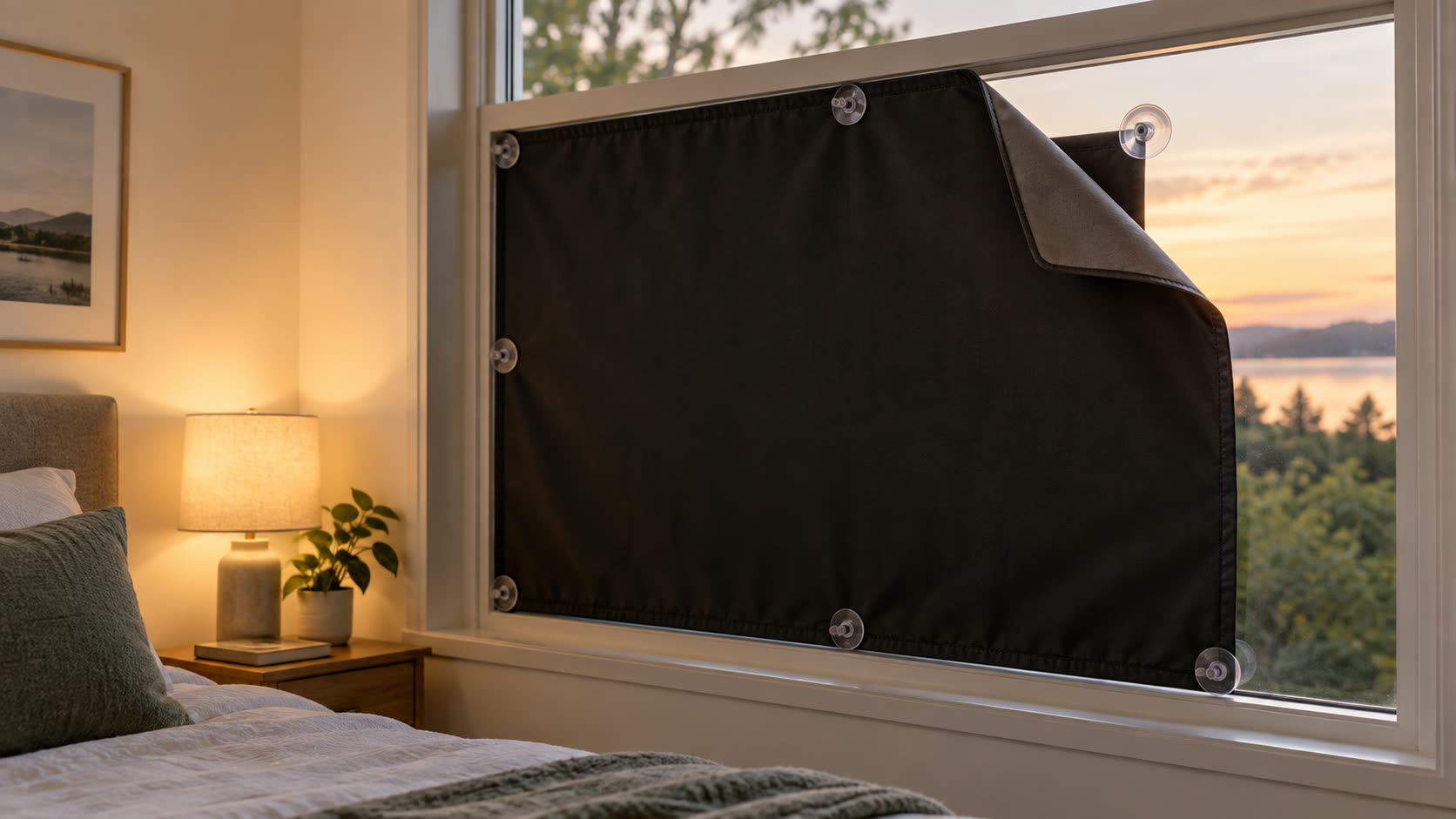
Why suction cups release at a glance
A portable blackout cover may stay up on one window and fail on another. That does not automatically mean its fabric is too heavy or the cups are defective. The pane may be textured, filmed, damp or narrower than the attachment layout assumes. One cup may sit partly on a gasket rather than flat glass. A panel pulled too tight can also transfer more load to a corner. Diagnose the contact point and the product's own fitting sequence before adding anything to the glass.
| Symptom | First thing to check | Sensible next step |
|---|---|---|
| All cups release quickly | Pane material or surface film | Confirm approved smooth glass |
| One corner releases | Cup damage or uneven panel tension | Inspect and refit that corner |
| Cups slip after condensation | Moisture on the pane | Dry and address moisture source |
| Panel falls after window opens | Sash or handle movement | Reposition only within maker's limits |
| Cups fail on caravan pane | Acrylic or coating compatibility | Ask window and blind makers; do not assume |
Begin by identifying the glass. A smooth household pane may accept suction; patterned glass, applied privacy film, acrylic and some specialist coatings may not. Do not use a generic “works on glass” description to override a window maker's restrictions. If the cover is for travel, measure available clear pane separately from the whole frame. The panel may be large enough to cover the opening but have nowhere suitable for all its cups. Our portable baby-travel guide covers this measurement before packing a blind.
A careful refitting sequence
Take the panel down safely and inspect every cup. Look for cracks, distortion, a hardened edge or a missing fixing piece. Clean the glass and cups using the method specified for that product and allow the contact surface to be in the condition the maker requires. Tommee Tippee's Sleeptight support guidance says the window should be clean and dry before attaching its blind, describes pressing top cups onto glass, and gives a separate method for its stick-and-twist corner cups. It also says a cup that will not attach may be slightly moistened. Follow the instructions supplied with your particular version, because cup designs can change.
Place each cup completely on clear approved glass, not over a frame seal or edge. Fit the upper row and corners in the order stated, then let the fabric hang without pulling the whole panel sideways to reach a distant point. Where the panel has gathering or adjustment tabs, use them to shape the fabric rather than stretching a cup. Give the fitted cover a gentle check and observe it for a while before leaving it in use. A cup that promptly lifts again is a failed fixing, not a request for more force.
When removing the panel, use its release tab or maker's method instead of dragging the cup across glass or yanking on fabric. Count the cups before packing. Dry any damp fabric or suction parts in accordance with care instructions so moisture is not trapped in the storage bag. Our suction-blind buying guide compares format and size choices, while the suction-versus-adhesive guide explains why a different attachment method may be preferable on a familiar window.
Avoid fixes that hide the real problem
Do not add unapproved glue, double-sided tape or a solvent to a falling cup. These can damage a coating or frame, complicate removal and give a false sense of security. Do not attach a cup partly to glass and partly to a rubber seal; the surfaces move differently. Do not place the panel across a trickle vent, handle or window opening to gain an extra attachment point. The existing-home ventilation guide for England advises keeping trickle vents open and unblocked.
Persistent condensation is a separate problem. Wet glass can impair contact, while covering the window may make moisture less visible. Investigate the room's ventilation and the source of moisture rather than repeatedly wiping only the suction spots. Our blind-and-condensation guide explains what can and cannot be inferred from droplets behind a covering.
If children use the room, loose cups and fabric should not be within reach of a cot or bed. A cordless temporary panel does not make an older looped blind behind it safe. The Office for Product Safety and Standards advises keeping cots, beds and climbable furniture away from blind cords; its guidance applies to the whole room, not just the new panel. A repeatedly falling cover is especially unsuitable above a child's sleeping space.
When to choose another format
If the pane is unsuitable, the cup is damaged or the panel cannot reach all its intended contact points, switch methods. A hook-and-loop sheet may attach to an approved frame surface and offer greater overlap, but adhesive suitability and removal must be checked. A frame-mounted no-drill blind can be easier for everyday use on a compatible sash. An existing curtain pole may allow a room-side cover without touching the pane at all. Our no-drill guide compares these routes by surface and use.
The Tommee Tippee and Amazon Basics examples below are both portable panels, not guaranteed replacements for one another. Their sizes, attachment details and supplied parts differ. Read the current listing and the included instructions for the exact variant, especially if a product image shows a different cup design from the package. The goal is a cover that can be fitted reproducibly to this pane and removed without damage, not a panel that stays up only after improvisation.
Products for this job
Two portable suction formats
These illustrate different cup and panel designs. Use each maker's instructions for the exact version supplied; a tip for one cup type may not apply to the other.
Tommee Tippee Sleeptight™ Portable Blackout Blind
Best for: Travel and occasional glass-mounted use
A foldable fabric cover that attaches to glass with suction cups and adjusts to the window. It is the most travel-oriented option here and avoids permanent fixings.
What stands out
- Packs away for travel
- Suction-cup fitting requires no drilling
- Adjustable fabric can accommodate different windows
Keep in mind
- Suction depends on clean, compatible glass
- Taking it down and refitting it adds daily effort
- It is a functional cover rather than a fitted interior blind
- Medium 99 × 130 cm
- Suction cups
- Packable
- Adjustable
Amazon Basics Portable Blackout Curtain, beige, 127 × 198 cm
Best for: A large suction-mounted travel cover
A large polyester blackout cover that attaches to smooth glass with suction cups. Hook-and-loop tabs let the fabric gather to suit smaller windows, and the supplied bag makes it practical to store or pack.
What stands out
- No drilling or adhesive on the frame
- Large 127 × 198 cm panel
- Includes a travel bag and is listed as machine washable
Keep in mind
- Requires clean, smooth glass and careful suction-cup removal
- Needs taking down to restore the full view
- Availability and exact colour can change by retailer variant
- 127 × 198 cm
- Suction cups
- Hook-and-loop adjustment
- Travel bag