
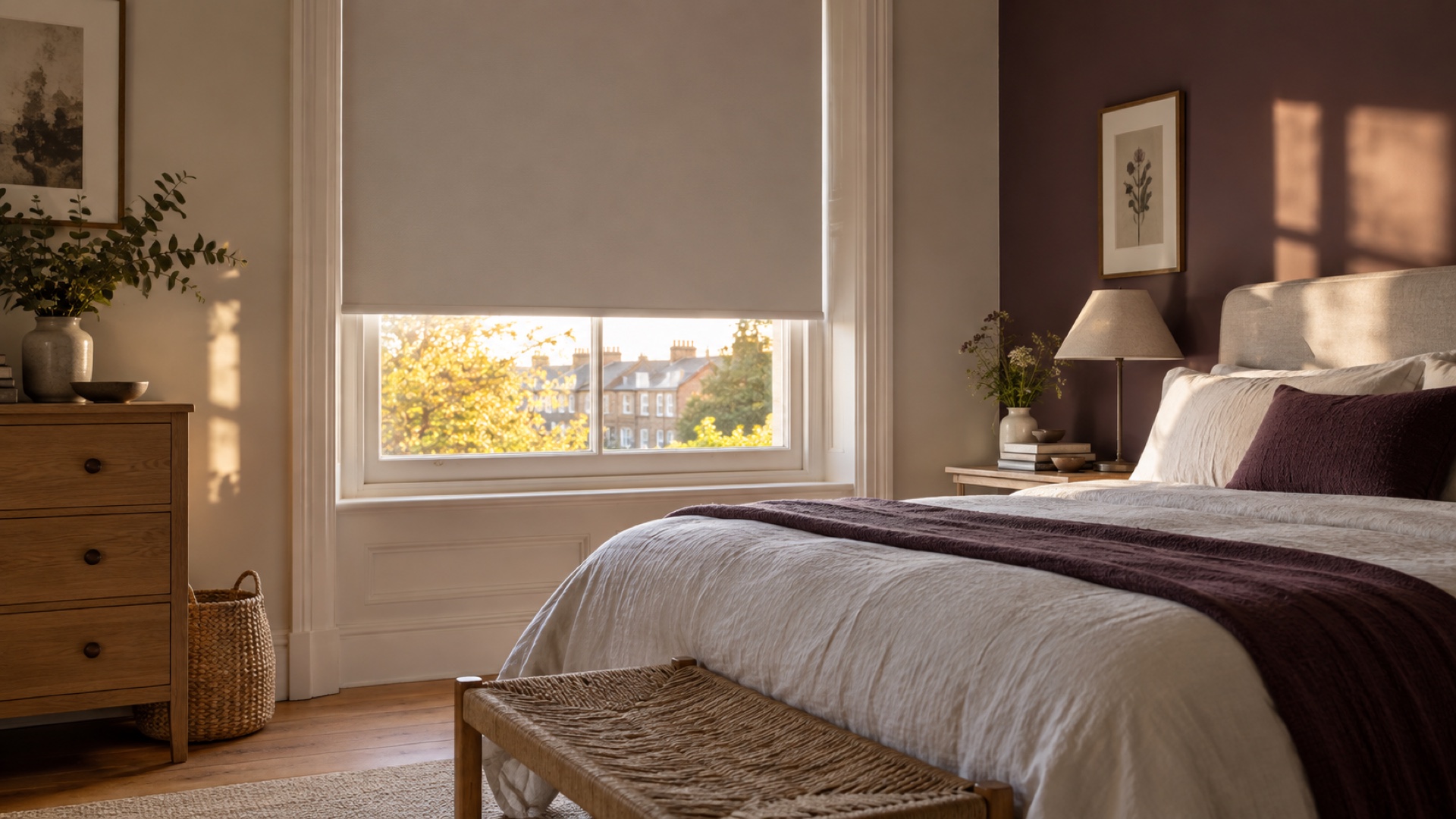
The short answer
Yes, blackout blinds can help keep a room cooler when they shade sun-exposed glass before the solar gain enters the room. They do not refrigerate the air, remove heat already stored in walls and furniture or guarantee a fixed temperature reduction. “Blackout” describes visible-light control; it is not a standard thermal performance figure.
The current GOV.UK Beat the Heat home checklist for England identifies homes without internal or external window shading as more likely to overheat. It recommends considering curtains or blinds and, during hot weather, shading or covering windows. It also recommends opening windows when the outside air feels cooler, where it is safe to do so.
Read the current GOV.UK hot-weather checklist.
How a blind changes solar gain
Sunlight carries energy through the glass. An internal blind absorbs or reflects some of it and reduces the amount reaching the room directly. Because the radiation has already crossed the glazing before it meets an internal blind, some absorbed heat can still remain inside. An external shutter or awning intercepts the sun earlier and is therefore a different, often stronger, heat-control approach.
Fit matters. A blind covering the bright glazed area is more useful than a narrow cloth with exposed side strips. Roof windows and large west-facing panes can receive intense sun; a code-matched internal blind may improve shade, while the window manufacturer may offer a separate external heat-protection product.
Colour, backing and air gaps influence the result, but they cannot be reduced to a rule that all white blinds are best or all dark blinds are worst. Look for tested solar values for the complete product and glazing combination if a precise comparison is important. The thermal-versus-blackout blind comparison separates the two labels.
When to close and open the blind
Close the covering before direct sun reaches the window. For an east-facing room that may be early morning; for a west-facing bedroom it may be the afternoon. Waiting until the room already feels hot reduces the benefit because the glazing, floor and furnishings have absorbed energy.
When the outdoor air becomes cooler than the room and it is safe, ventilate to release heat. Cross-ventilation is more effective than one small opening where the layout permits it. Security, pollution, noise, insect risk and occupants’ needs all affect whether and how a window can be opened.
Turn off unnecessary heat sources and follow official hot-weather advice for occupants at higher risk. This article is about window shading, not medical care. Seek NHS guidance for symptoms of heat exhaustion or heatstroke.
Limits, glazing and ventilation
Do not tape over trickle vents or permanently seal an opening window. Darkening and heat management should not create persistent condensation or remove required background ventilation. Inspect behind close temporary covers, particularly after cool nights or in humid rooms. Use our darkened-room ventilation guide for the window-use check.
Reflective sheets, foil and some close-fitting covers can create uneven temperatures across certain glazing units. Follow the window and cover manufacturer’s compatibility instructions. If the glazing is coated, laminated, cracked or otherwise specialist, ask the maker before adding a reflective internal layer.
A blind is only one part of overheating control. Roof insulation, external shade, glazing area, floor level, cross-ventilation and internal heat sources can dominate the room result. Top-floor flats and homes with large east-, south- or west-facing windows deserve a broader plan.
What about keeping heat in during winter?
A closed blind or curtain creates an additional layer and can reduce air movement at the window. Energy Saving Trust includes heavy thermal curtains and sealed blinds among options that can reduce heat loss in appropriate homes. It also makes clear that glazing and draught control are whole-window issues.
Do not quote the savings for replacing single glazing as though a blind produces the same result. A loose roller blind is not double glazing, and an energy-saving claim needs evidence for the exact system. Open coverings on sunny winter days when useful solar gain is wanted, then close them after dusk if that suits the room and does not worsen condensation.
See Energy Saving Trust’s current windows and doors guidance.
A practical hot-room sequence
- Identify which windows receive direct sun and at what time.
- Close suitable blinds or curtains before that period.
- Keep the hottest outside air out when the room is cooler, subject to ventilation needs.
- Open windows when it becomes cooler outside and safe.
- Check roof rooms, nurseries and occupied top floors more frequently.
- Use the actual room conditions to judge the strategy, not a seller’s universal claim.
The defensible conclusion is modest: blackout blinds can be useful solar shading, especially when fitted and timed well, but their light-blocking label alone does not prove a particular cooling or energy-saving result.