
The short answer
Match adhesive format to the surface and routine
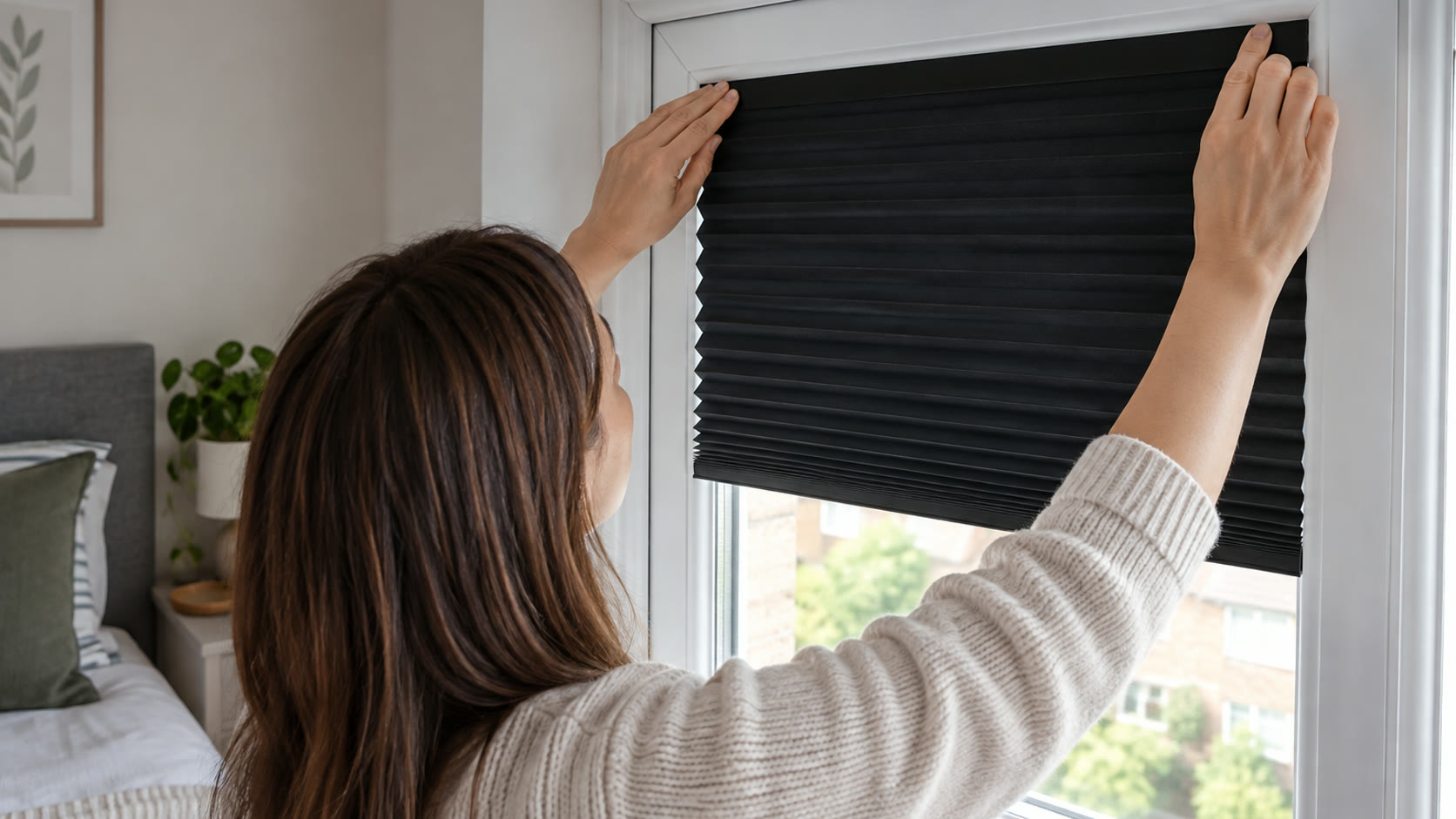
Stick-on blackout shades are useful when you cannot drill or need a quick temporary cover. A pleated shade is light and inexpensive; a fabric panel can overlap more of the opening; a hook-and-loop sheet is easier to remove repeatedly. All depend on a compatible clean surface, and removal may leave marks.
Identify whether the fixing touches glass, uPVC, timber, paint or wallpaper.
Allow enough material for the opening and the perimeter overlap you need.
Plan safe removal and regular checks, especially in children's rooms.
Product shortlist
Three stick-on formats to compare
A pleated adhesive shade, a broad fabric panel and a cut-to-fit hook-and-loop cover offer different balances of appearance, edge coverage and daily access.
Maritown adhesive pleated blackout shade, black, 90 × 150 cm
Best for: A low-cost temporary shade on a compatible frame
A temporary pleated non-woven shade with a self-adhesive header. It can be trimmed to width and held at different heights with the supplied clips, making it useful for short-term room darkening.
What stands out
- No drilling or hanging chain
- Can be trimmed to a narrower width
- Two clips allow a basic raised position
Keep in mind
- Adhesive may mark paint or leave residue
- Pleats need extra drop to cover the full window
- Clips and lightweight material suit temporary use better than heavy daily handling
- 90 × 150 cm
- Non-woven pleated material
- Self-adhesive header
- Cordless clips
Maritown stick-on temporary blackout blind, 120 × 180 cm
Best for: A broad removable cover without suction cups
A cut-to-size black fabric panel with self-adhesive fixing and adjustable clips. It offers more coverage than many suction products where the frame finish is suitable.
What stands out
- 120 × 180 cm size
- Can be cut down
- No drilled holes
Keep in mind
- Adhesive can mark or lift delicate finishes
- Daily removal is less convenient than a roller
- The panel must be kept securely fitted and out of children's reach
- 120 × 180 cm
- Cut to size
- Self-adhesive fixing
- Adjustable clips
Easynight Blackout Blind, regular 150 × 145 cm
Best for: A removable cover with generous edge overlap
A cut-to-size blackout sheet fixed around the window frame with removable hook-and-loop attachments. It can cover the complete opening more closely than an ordinary roller blind and packs into a storage bag between uses.
What stands out
- Can be cut for an unusual window shape
- Hook-and-loop attachment can reduce perimeter gaps
- No drilling and a storage bag is included
Keep in mind
- Adhesive suitability depends on the frame finish
- Less convenient than a blind for frequent daylight access
- The fabric can look utilitarian in a finished bedroom
- 150 × 145 cm
- Cut to size
- Hook-and-loop fixing
- Storage bag
Stick-on formats at a glance
Dimensions refer to the selected catalogue variants; check the actual adhesive type, installation surface and current size before purchase.
| Format | Selected size | Fixing | Best use | Main limitation |
|---|---|---|---|---|
| Maritown pleated | 90 × 150 cm | Self-adhesive header | Short-term simple shade | Pleats, clips and limited daily durability |
| Maritown fabric panel | 120 × 180 cm | Self-adhesive attachment | Broad cut-to-size coverage | Functional appearance and adhesive removal |
| Easynight sheet | 150 × 145 cm | Hook-and-loop strips | Repeatable removal and edge overlap | Slower daily access than a roller |
What counts as a stick-on blackout blind?
This category includes lightweight pleated shades with an adhesive header, fabric panels attached to self-adhesive strips and reusable covers fixed with hook-and-loop tape. They share a no-drill approach, but they do not work the same way. A single top strip supports a shade that folds upwards. A panel may attach along more of the perimeter. Hook-and-loop can allow repeated removal while leaving a base strip on the surface.
The attraction is speed and flexibility. A renter, guest-room owner or shift worker may need more darkness without ordering a permanent blind. The limitation is the fixing surface. A strong adhesive may hold but damage paint during removal; a gentle one may peel away in warmth or humidity. Material that blocks central light can still leave edge glow if it stops at the glass line.
For a broader view of temporary formats, compare our temporary blackout blind guide and portable blind guide. Suction products are a different route when you want to attach to smooth glass without adhesive on the frame.
The three options in detail
Maritown pleated shade: quick basic cover
The selected black 90 × 150 cm Maritown shade is a lightweight pleated non-woven product with a self-adhesive header and clips that can hold it at a raised height. It can be trimmed to width according to its listing. A pleated drop does not behave like a flat 150 cm sheet: allow enough length for the folds when fully lowered, and check the maker's sizing advice for your window height.
This format suits a temporary room where a simple functional appearance is acceptable. The top strip requires a clean, dry, smooth compatible frame. Do not attach it to loose wallpaper or flaky paint. Check the clips and folded material regularly; a lightweight shade is not a heavy-duty mechanism for rough daily use.
Maritown fabric panel: broader coverage
The selected 120 × 180 cm black panel offers more material to cut and overlap than a small pleated shade. That can be useful on a wide bedroom opening or when side leakage is the main frustration. Its adhesive fixing and adjustable clips remain surface-dependent. Map the full opening before cutting; once the panel is shortened, you cannot restore a missing side margin.
A large panel can look utilitarian, particularly in a finished living room, and opening the window fully may mean moving the material aside. Consider whether a normal roller or curtain would better match a daily routine. For occasional darkening, the functional look may be an acceptable trade-off.
Easynight: repeatable hook-and-loop coverage
The Easynight regular 150 × 145 cm cover is cut-to-size and attaches around the frame with hook-and-loop fixing. It can provide perimeter overlap because the attachment is not limited to a single top strip. Removing the fabric can restore daylight, while the base fixing remains in place.
The trade-off is that you must peel or fold the cover back whenever you want the view, and repeated handling can wear attachment points. Check whether the chosen surface can accept the adhesive base. Keep the attachment clean and dry so the material does not sag into the room.
Measure for material and overlap
Measure the visible opening at its widest and tallest points, then add the overlap you can actually fit on the frame or adjacent wall. Check handles, vents, hinges and a moving sash. A temporary shade attached over a handle may obstruct opening, ventilation or an escape route.
For a pleated product, check whether the advertised height is the fully extended material or a useful covered drop after pleating. For a flat panel, check whether the stated dimensions include an attachment margin or refer only to fabric. For hook-and-loop, plan continuous suitable strips where the panel must seal light. A small unfastened corner can produce a surprisingly bright triangle in a sunny room.
Offer the uncut product to the opening first. Mark cut lines with a ruler and follow the maker's method. Keep scissors clear of a sewn edge, reinforcement or attachment strip. Cutting a shade narrower may also change how its clips hold; test a small section if the instructions allow it.
Prepare the surface carefully
Clean according to the product directions. A frame can have dust, hand oils, cleaning-product residue or condensation even when it looks clean. Let it dry completely. Check that the surface is sound: lifting paint, chalky plaster and damp timber are poor substrates for adhesive. Do not apply strong tape across silicone seals, drainage slots or gasket material that the window needs to function.
Trial-position with low-tack tape if appropriate. Check that the shade is level and covers the opening. Some strong adhesives cannot be repositioned without losing grip or lifting finish, so mark the intended line before removing the backing. Observe the maker's pressing and cure times rather than immediately pulling on the attached material.
If the adhesive lifts, support the shade and remove it safely. Repeatedly sticking the same contaminated strip back may not restore its designed hold. Use the maker's replacement parts or change mounting method; do not add household glue to an unsuitable surface.
Rental, removal and child safety
Read your tenancy terms and ask permission where a fixed adhesive could alter the finish. Photograph the clean surface before installation. “Removable” describes an intended process, not a guarantee that old paint or varnish will remain perfect. Use the maker's removal instructions; pulling a strip sharply can take paint with it.
Many stick-on shades are cordless, which avoids a hanging operating loop. Still, a loose panel, clip or adhesive header can fall within a child's reach. Check the fitting regularly, keep cots and furniture away from the window and remove a failing product promptly. The Office for Product Safety and Standards and BBSA child-safety guidance explain the wider UK safety approach to window coverings.
When to choose a different format
If you open the window and blind many times daily, a fitted cordless roller or cellular blind is more convenient than repeatedly handling a panel. If your mounting surface is fragile, a suction product on suitable glass may avoid adhesive on the frame. If you need very strong perimeter coverage, a carefully attached overlapping panel can work, but only if the surface and room use permit it.
Choose the pleated shade for low-cost short-term use, the larger fabric panel for broad coverage, and Easynight for a repeatable removable cover. Whatever the format, the useful result comes from compatible attachment, complete coverage and an easy routine for opening the window safely.
Clear answers
Frequently asked questions
Short answers to the fitting, use and care questions that most often change the result.
Do stick-on blackout blinds damage paint?
They can. Adhesive strength, paint age and surface preparation all affect removal. Test a permitted hidden area and follow the maker's removal method; do not assume a no-drill product is mark-free.
Can I stick a blackout blind to glass?
Only if that specific product allows glass mounting. Many stick-on shades are designed for frames, while suction products attach to clean smooth glass. Do not cover ventilation or essential opening hardware.
Can a stick-on shade be cut to size?
Some pleated or fabric panels can be trimmed, but cut only where the manufacturer permits it. Allow for the pleats, header and side coverage before trimming.
Are stick-on shades suitable for a rental?
They can be useful, but check the tenancy terms and surface condition first. Adhesive can leave residue or lift paint, so photograph the area and retain the removal instructions.
Are adhesive blinds safe in a child's room?
A cordless shade avoids a hanging operating loop, but the attachment, clips and loose fabric must be secure and inaccessible. Keep cots and furniture away from the window and inspect the fixing regularly.